Bali Photography: Build a Respectful Photo Route
Bali photography becomes stronger when the route has a story. A day that races from a temple gate to a rice terrace, waterfall and sunset may produce familiar images but very little understanding of place.
Choose one visual theme and one region: water and agriculture in central Bali, ceremony and architecture around Ubud, volcanic context in the east, or coast and movement on the Bukit. Then let weather, access and real life shape the photographs.
DFS returned no measurable suggestions for the tested “Bali photography spots” and “Bali photo spots” seeds in August 2026. This page therefore remains a supporting visual-planning owner, not a fabricated high-volume list. It earns its place by improving routes, behaviour and photography decisions.
Choose a Bali photo story
| Story | Strong base | What to photograph | Main boundary |
|---|---|---|---|
| Water, rice and community | Ubud or Jatiluwih route | Canals, fields, paths and wider landscape | Working fields and private paths are not sets |
| Temple and performance | Ubud or selected regional temple route | Architecture, offerings, light and context | Worship and ceremony take priority |
| Coast and movement | Uluwatu, Sanur or Canggu | Cliffs, surf, boats and changing light | Ocean access and drone rules vary |
| Highlands and waterfalls | Lovina or Munduk route | Mist, forest, water and scale | Rain changes trail and water risk |
| East-Bali landscape | Sidemen or Amed | Valley, coast and mountain context | Volcano visibility is never guaranteed |
Build one regional route per day. Bali traffic punishes photo checklists, and the best light disappears while crossing the island.
Ubud: people, culture and layered mornings
Ubud suits a story about culture and everyday detail more than a sequence of famous backdrops. Markets, streets, performances, temples and rice edges can be photographed without turning people into props.
Start with a walkable morning around the exact accommodation, then choose one deliberate cultural or landscape anchor. Ask before making a close portrait. Do not rearrange offerings, interrupt work or direct someone without consent.
At a performance, check whether photography is permitted and whether flash is restricted. A ticket allows attendance under the venue’s rules; it does not remove performer or audience boundaries.
Rice landscapes: photograph the system, not only the terraces
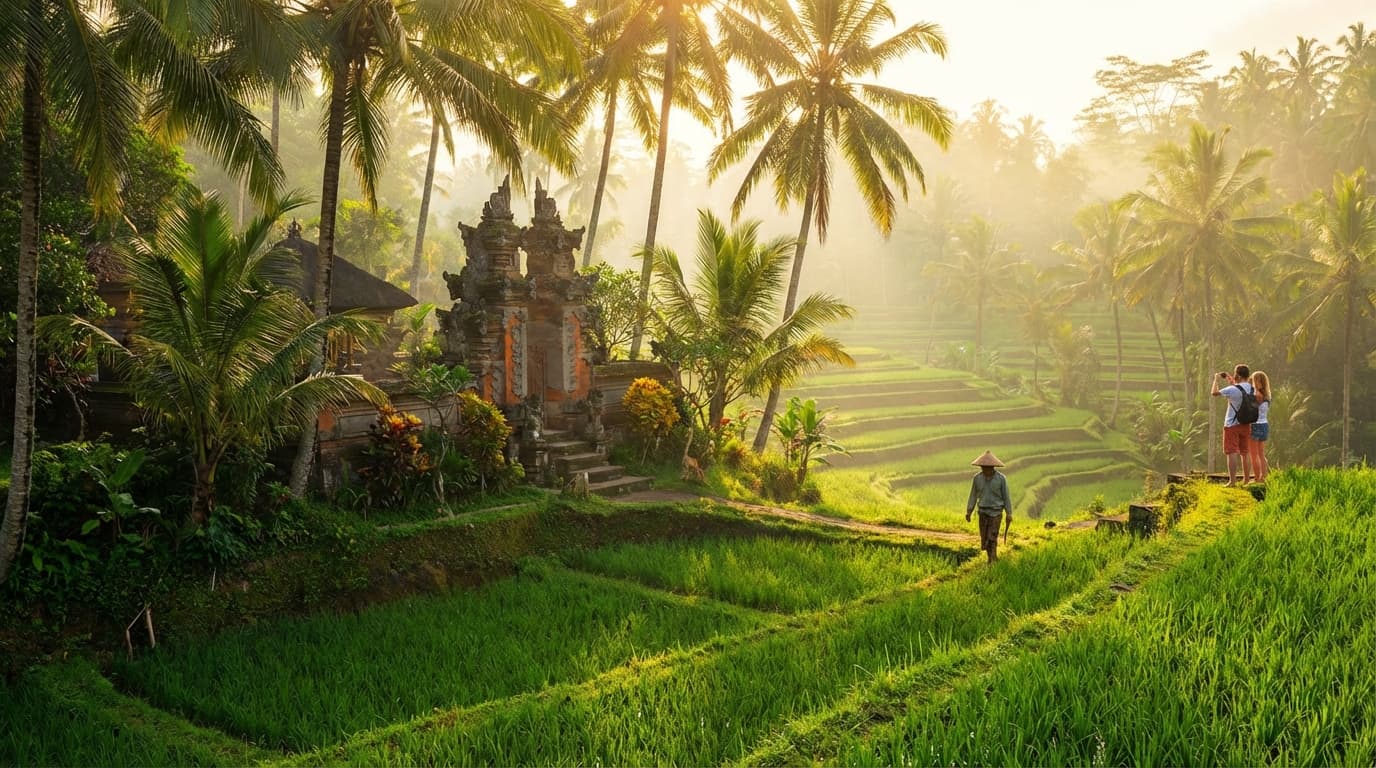
UNESCO’s Cultural Landscape of Bali Province explains the relationship between water temples, canals, fields and cooperative subak management. A stronger visual story includes water movement, paths, scale and human work with permission—not only a saturated green viewpoint.
Use the Bali rice-terraces guide to choose Tegallalang, Jatiluwih or Sidemen. Field colour and crop stage vary plot by plot. Never step into planted land, block a farmer or create a shortcut for a photograph.
Temples: sacred place before composition
Temple architecture can be visually compelling, but active worship and restricted areas come first. Bali’s visitor code requires respectful conduct and compliance with local rules at sacred places.
Before raising the camera:
- confirm photography is allowed in that area;
- follow dress and access instructions;
- ask before photographing an identifiable person;
- avoid obstructing worship or processions;
- never stage a pose in a restricted or sacred position.
Famous gate photographs may involve queues, commercial staging or optical tricks. Decide whether that product supports the story; do not mistake popularity for cultural depth.
East Bali: plan for context, not a guaranteed volcano
East Bali can connect water-palace architecture, village landscape, coast and Mount Agung context. Mountain visibility changes with cloud and weather. A route sold around a clear volcano must still work when the peak is hidden.
Stay in Sidemen or Amed when dawn and morning light are central to the project. A pre-dawn transfer from far south adds fatigue and reduces the ability to adapt.
Choose one architectural or landscape anchor and one supporting scene. Follow current ceremony and access rules, and do not enter local spaces because a map labels them as a photo spot.
Coast: movement matters more than an empty beach
Canggu fits surf and social coastline; Uluwatu fits cliffs and directional sunset light; Sanur fits an east-facing early morning and working boats. Each coast has different access, tide, weather and safety conditions.
Keep distance from surfers, swimmers and working crews. Use a longer focal length when needed rather than entering unsafe water or blocking access. Salt spray and sand are equipment risks, but they do not justify carrying a heavy kit that becomes a distraction.
Never launch a drone based on an old blog post. Verify current aviation requirements, restricted airspace, site rules, ceremony, privacy and landholder permission for the exact location.
Waterfalls: protect the route and the equipment
Waterfall photography combines spray, wet rock, changing flow and crowds. Choose the route through the Bali waterfalls owner before deciding on lenses or accessories.
Do not enter water for a lower angle when conditions or rules are unclear. A dry bag can protect essentials from spray, but it cannot make a river, trail or pool safe.
Work with the light you receive
“Best time” tables often pretend Bali light is predictable. Use direction and fallback instead:
- early light for an east-facing coast or a quieter permitted route;
- side light for texture in fields and architecture;
- overcast conditions for waterfalls, forest and portraits with permission;
- late light for west-facing coast and silhouettes;
- rain as part of the story when access remains safe.
Scout the sun direction for the exact date, but do not promise a beam, reflection, clear mountain or empty frame. Clouds and activity can improve the story.
A compact, deliberate kit
Start with the smallest setup that covers the story:
- one familiar phone or camera;
- one versatile lens if using an interchangeable-lens camera;
- charged battery and enough storage;
- simple rain protection and a dry cloth;
- a secure strap;
- water and personal sun/rain protection.
Leave specialist equipment behind when it creates more transport, attention or setup time than value. Buying gear is optional; familiarity beats novelty on a moving trip.
Photographing people responsibly
Consent is more than a quick nod when an image may be published commercially. Explain the intended use when possible, respect refusal and avoid photographing children without a parent or guardian’s clear permission.
Do not turn poverty, worship, farm work or private homes into “authentic content”. If paying for a portrait or organised session, clarify expectations without implying that money buys unlimited rights.
Compare a photo tour or driver
A photo-focused guide may help with access, local context and timing. A driver provides transport and may not be a photography or cultural guide. Confirm the exact role.
Compare:
| Detail | Verify live |
|---|---|
| Route | One region, realistic sequence and approved access |
| Guide | Local knowledge, photography role and language |
| Timing | Pickup, permitted hours, waiting and return |
| Permissions | People, property, temple, commercial use and drone |
| Conditions | Weather fallback and route substitution |
| Terms | Current total, inclusions and cancellation |
Use the private-driver page when transport flexibility is the main need. Check current provider terms rather than an old fixed day rate.
The verdict
Choose Ubud and central Bali for a culture-and-water story, Jatiluwih or Sidemen for a landscape-led project, Uluwatu or Sanur for coast and light, and north Bali for highlands and waterfalls.
One coherent regional story will usually produce better photographs than twenty famous pins. Respect access, ask permission and let Bali remain a place rather than a backdrop.
Frequently Asked Questions
Where are the best photo spots in Bali?
Choose by story rather than one ranking: Ubud and central Bali for culture and rice landscapes, East Bali for water palaces and mountain context, the Bukit for cliffs and coast, and north Bali for highland landscapes and waterfalls. Build one regional route per day.
Can I photograph inside Bali temples?
Permission and restrictions vary by temple, ceremony and area. Follow signs and local instructions, dress appropriately, never enter restricted sacred spaces and ask before photographing worshippers or ceremonies. Paying admission is not blanket permission.
Can I use a drone in Bali?
Do not assume drone use is allowed. Current Indonesian aviation rules, restricted airspace, site rules, privacy, ceremonies and landholder permission can all apply. Verify current official requirements for the exact location and flight before carrying or launching a drone.
What time is best for Bali photography?
Early and late light can be softer, but weather, cloud, access and the direction of the scene decide the result. Do not promise a sunbeam, reflection, clear volcano or empty viewpoint; build a composition that works in the conditions you receive.
Do I need a professional camera in Bali?
No. A phone or familiar camera is enough when it lets you react quickly and travel lightly. Skill, permission, route and light matter more than buying specialist equipment for one trip.
How do I avoid crowds at Bali photo spots?
Stay near the chosen area, arrive within permitted hours, choose one anchor and accept other visitors. Never bypass access, enter fields or disrupt worship for an empty frame. A quieter regional alternative is often better than fighting a famous viewpoint.
Sources & References

Go2Bali Team
Travel Writer at Go2Bali
- ●Bali travel experts
- ●Locally verified information
- ●Regular content updates
The Go2Bali team shares local insights, practical travel tips, and in-depth guides to help you explore Bali like a seasoned traveler.
More about usPlan Your Bali Trip
Book hotels, tours, and transport through our trusted partners and get the best deals for your Bali adventure.
Affiliate links: we may earn a commission at no extra cost to you. Prices and availability are set by each provider.