Visiting Bali in Rainy Season: What to Expect & Tips
Introduction
Bali's rainy season, stretching from November through March, scares off many first-time visitors who picture nothing but gray skies and endless downpours. The reality is far more nuanced and, for savvy travelers, the wet season is actually one of the best times to experience the island. Prices plummet, crowds thin out, the landscapes reach peak lushness, and the rain itself follows predictable patterns that leave most mornings gloriously sunny.
Having spent multiple rainy seasons in Bali, we can tell you that the "bad" weather is wildly overstated. Yes, it rains. But it rains in a tropical way: dramatic, warm downpours that last an hour or two before the sun breaks through again. You will not spend your holiday huddled indoors. You will, however, spend it enjoying Bali at a fraction of high-season prices with far fewer tourists competing for that perfect temple photo.
This guide covers everything you need to know about visiting Bali during the wet season, including month-by-month breakdowns, what to pack, the best activities, and how to plan your days around the weather.
What Bali's Rainy Season Actually Looks Like
The Daily Weather Pattern
The most important thing to understand about Bali's rainy season is the daily rhythm. A typical day during the wet months follows this pattern:
- 6:00-7:00 AM: Sunrise with clear or partly cloudy skies. Humidity is moderate, temperatures around 25-27C (77-81F).
- 7:00 AM-1:00 PM: Mostly sunny and hot, perfect for beach time, temple visits, or outdoor activities. Temperatures climb to 30-33C (86-91F).
- 1:00-3:00 PM: Clouds build up. The air feels heavy and humid. This is your cue to head indoors or to a restaurant.
- 3:00-5:00 PM: Heavy rainfall, often with thunder and lightning. The downpours can be intense but are usually localized.
- 5:00-7:00 PM: Rain tapers off. Spectacular post-rain sunsets are common, with vivid colors reflected in puddles and wet surfaces.
- Evening: Usually dry and pleasant with cooler temperatures, ideal for dining out.
This pattern holds roughly 70% of the time. Some days will be entirely sunny, and occasionally you will get an all-day drizzle, though this is uncommon.
Month-by-Month Breakdown
November: The transitional month. Rainfall increases but is still manageable at roughly 170mm for the month. Many days feel like dry season with only brief evening showers. Hotel prices start dropping. An excellent time to visit.
December: Rain picks up noticeably, averaging 250-280mm. The Christmas and New Year holiday period brings a temporary spike in tourist numbers and prices despite the weather. Book accommodation well in advance for the holiday weeks.
January: One of the wettest months with 300-350mm of rainfall. Rain can start earlier in the day, sometimes late morning. This is when you get the best deals on accommodation, with rates at their lowest. The landscape is stunningly green.
February: Similar to January in rainfall (280-320mm). Slightly warmer and more humid. The rice terraces are flooded and at peak beauty. Surfing conditions on the east coast are excellent.
March: The rain begins to ease, averaging 200-250mm. More sunny days appear, and the transition to dry season begins. Still excellent value for accommodation and flights. A great time for budget travelers.
Why the Rainy Season Can Be Better
Dramatic Savings on Everything
The financial advantages of visiting during the wet season are substantial:
- Accommodation: Expect 30-50% discounts on hotels and villas. A four-star resort in Seminyak that charges IDR 2,500,000/night ($160 USD) in August might cost IDR 1,200,000-1,500,000/night ($75-95 USD) in January.
- Flights: International flights to Bali drop significantly. Return flights from Australia can be $200-400 cheaper, and European connections often save $300-600.
- Activities: Tour operators and activity providers offer rainy season discounts of 10-30%. Multi-activity packages become more negotiable.
- Dining: Some restaurants in tourist areas run promotions to attract the smaller crowds. Happy hour deals become more generous.
Fewer Tourists, Better Experiences
Popular attractions that are mobbed during July-August become genuinely peaceful. Imagine visiting Tirta Empul water temple without fighting through crowds, or having a section of the Tegallalang Rice Terraces almost entirely to yourself. Quiet beaches, shorter restaurant wait times, and more personal attention from guides and staff all enhance the experience.
Lush, Green Landscapes
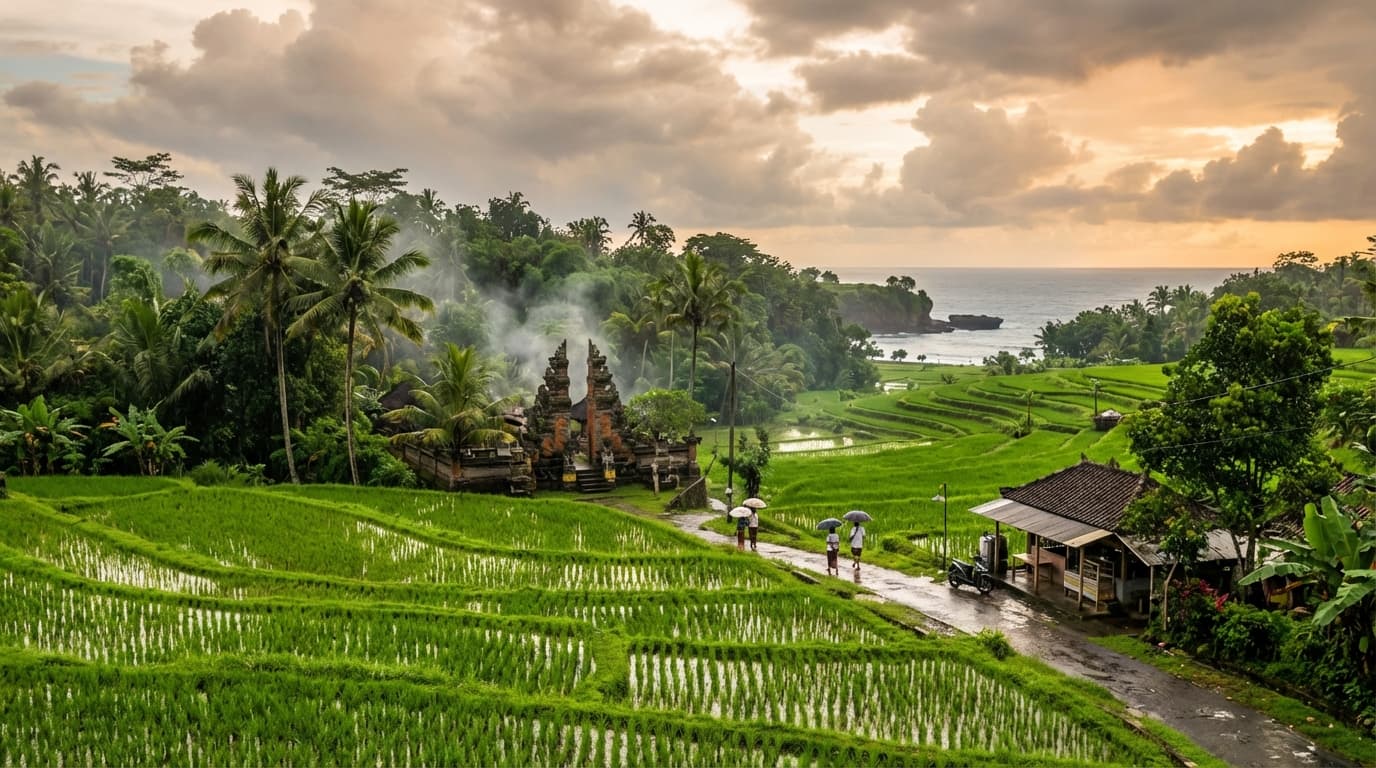
The rain transforms Bali's scenery. The rice terraces glow an electric green, waterfalls run at full power, and the jungle canopy is dense and vibrant. Photographers will find the rainy season light, often diffused through clouds, to be excellent for avoiding harsh shadows and capturing saturated colors.
Better Surfing (East Coast)
While the west coast swells die down, the east coast comes alive during the wet season. Breaks like Keramas, Sanur Reef, Hyatt Reef, and Nusa Dua produce consistent, quality waves from November through March. This is when many serious surfers visit Bali.
Best Activities for Rainy Season
Morning Activities (Before the Rain)
Plan your most important outdoor activities for the morning when skies are typically clear:
- Temple visits: Arrive at popular temples like Uluwatu or Tanah Lot when they open (usually 7:00-8:00 AM) for the best weather and fewest crowds.
- Rice terrace walks: Morning light on rain-soaked terraces is magical. Head to Jatiluwih or Tegallalang early.
- Beach time: Mornings offer warm sun and manageable waves. Sanur Beach is particularly pleasant in the wet season with calm waters.
- Hiking Mount Batur: The popular sunrise trek still runs during rainy season, though cloud cover can obscure views. Check the forecast the evening before.
- Snorkeling and diving: Morning conditions at spots like Amed and Tulamben are usually calm before afternoon weather moves in.
Afternoon Activities (During or After Rain)
When the skies open up, pivot to indoor or rain-friendly activities:
- Spa treatments: Bali is famous for affordable, luxurious spa experiences. A two-hour treatment costs IDR 300,000-600,000 ($19-38 USD) at quality spas. The sound of rain on the roof enhances the ambiance.
- Cooking classes: Learn to make Balinese dishes like nasi goreng, sate lilit, and sambal. Indoor portions of classes align perfectly with rainy afternoons. Expect to pay IDR 350,000-500,000 ($22-32 USD) per person.
- Museum and gallery visits: ARMA Museum in Ubud, the Blanco Renaissance Museum, and the many galleries along Jalan Raya Ubud are excellent rainy-day options.
- Shopping: Browse the boutiques of Seminyak, the art markets of Ubud, or the handicraft shops of Celuk and Mas villages.
- Cafe hopping: Bali's specialty coffee scene is thriving. Spend an afternoon sampling single-origin Balinese coffee at cafes like Seniman Coffee in Ubud or Hungry Bird in Seminyak.
- Yoga classes: Ubud is a global yoga destination. Drop-in classes cost IDR 100,000-200,000 ($6-13 USD) at studios like The Yoga Barn, Radiantly Alive, and Intuitive Flow.
Where to Stay During Rainy Season
Best Areas
Some parts of Bali handle the rainy season better than others:
- Ubud: Gets more rain than coastal areas due to its inland elevation, but the lush jungle setting makes rain feel atmospheric and romantic. Perfect for couples and wellness seekers.
- Seminyak and Kuta: Coastal areas tend to get slightly less rain and dry out faster. The flat terrain means less risk of flooding. Good for beach lovers.
- Sanur: The east coast receives less rainfall than the west coast during the wet season. Sanur's calm waters remain swimmable most days.
- Nusa Dua: The driest part of the Bukit Peninsula. Resort infrastructure handles rain well with covered walkways and indoor facilities. Ideal for luxury travelers.
- Uluwatu: Cliff-top location means good drainage and impressive storm watching. Wind can be stronger during wet season.
Areas to Approach with Caution
- Kerobokan and low-lying areas near rice paddies: Prone to flooding during heavy rain. Streets can become temporarily impassable.
- Remote mountain areas: Roads to places like Kintamani can be fog-bound and slippery. Allow extra travel time and consider hiring a local driver.
Essential Packing List for Rainy Season
A well-packed bag makes all the difference during the wet months:
Clothing
- 2-3 quick-dry shirts and shorts
- 1 lightweight waterproof rain jacket (packable, not heavy Gore-Tex)
- 1 pair of waterproof sandals with good grip (Tevas or similar)
- 1 sarong (doubles as temple wear and emergency rain cover)
- Swimwear (you will still swim plenty)
Gear
- Compact travel umbrella
- Waterproof phone pouch (IDR 30,000-50,000 at local shops if you forget)
- Dry bag for electronics and documents (20L is ideal)
- Waterproof daypack or rain cover for your backpack
- Reef-safe sunscreen (mornings are still sunny and you will burn)
Health
- Insect repellent with DEET or picaridin (mosquitoes increase significantly during wet season)
- Antimalarial medication if traveling to remote areas (consult your doctor)
- Basic first-aid kit including rehydration salts
- Hand sanitizer
Practical Tips for Navigating the Rain
Transportation
- Avoid scooters during heavy rain: Wet roads, reduced visibility, and oil slicks make scooter riding dangerous when it pours. Use Grab or Gojek ride-hailing apps during rain. A car ride from Ubud to Seminyak costs around IDR 200,000-300,000 ($13-19 USD) via app.
- Allow extra travel time: Traffic worsens during rain. A trip that takes 45 minutes in dry conditions may take 90 minutes or more. Build buffer time into your schedule.
- Book a private driver for day trips: For IDR 600,000-800,000 ($38-51 USD) per day, a private driver handles the stressful driving while you stay dry. They know which roads flood and alternative routes.
Planning Your Days
- Check the weather app the night before: The BMKG (Indonesian Meteorological Agency) app provides localized forecasts that are reasonably accurate for Bali. AccuWeather and Weather.com also work well.
- Front-load outdoor activities: Schedule temple visits, hikes, and beach time for the morning. Push indoor activities to the afternoon.
- Have a backup plan: For every outdoor activity, know a nearby indoor alternative. If your waterfall trek gets rained out, which spa or museum is nearby?
- Embrace the rain: Some of the most memorable Bali experiences happen in the rain. A warm tropical downpour at your private villa pool, dramatic storm-lit temple visits, or the fresh, petrichor-scented air after a heavy shower are all uniquely beautiful.
Rainy Season Events and Festivals
The wet months coincide with several significant Balinese events:
- Galungan and Kuningan (dates vary by the Balinese 210-day Pawukon calendar): A 10-day celebration honoring ancestral spirits. Penjor bamboo poles line every road, and temples come alive with ceremonies. Check the calendar for exact dates during your visit.
- New Year's Eve: Bali's tourist areas host major celebrations, particularly in Seminyak, Kuta, and Ubud. Expect fireworks, special dinners, and higher prices for the week surrounding December 31.
- Chinese New Year (January/February): Celebrated in parts of Bali, particularly in Denpasar and areas with Chinese-Indonesian communities. Temple offerings and special foods appear.
Health Considerations
The rainy season brings a few health concerns worth knowing about:
- Dengue fever: Mosquito populations spike during the wet season. Use repellent, wear long sleeves in the evening, and stay in accommodation with screens or air conditioning. Dengue-carrying mosquitoes bite during the day, so daytime repellent is essential.
- Bali belly: Humidity increases bacterial growth in food. Stick to busy warungs with high turnover, avoid raw vegetables at budget places, and drink only bottled or filtered water.
- Fungal infections: The humidity can cause skin issues. Bring antifungal powder or cream, keep feet dry, and let shoes air out completely between wears.
- Sun exposure: Do not underestimate the morning sun just because it is rainy season. UV levels remain high, and the equatorial sun burns quickly even through clouds.
Budget Example: Rainy Season vs. Dry Season (Per Day)
| Expense | Dry Season (July-Aug) | Rainy Season (Jan-Feb) |
|---|---|---|
| Mid-range hotel | IDR 1,800,000 ($115) | IDR 1,000,000 ($64) |
| Meals (3 per day) | IDR 400,000 ($26) | IDR 350,000 ($22) |
| Transport | IDR 200,000 ($13) | IDR 200,000 ($13) |
| Activities | IDR 500,000 ($32) | IDR 400,000 ($26) |
| Daily Total | IDR 2,900,000 ($186) | IDR 1,950,000 ($125) |
Over a 10-day trip, the rainy season saves you approximately $610 USD, enough for extra activities, nicer accommodation, or even extending your stay by several days.
Final Thoughts
Bali's rainy season is not something to fear but rather something to embrace. With a little planning, flexible scheduling, and the right gear, you will experience the island at its most lush, affordable, and uncrowded. The rain follows predictable patterns, mornings are almost always sunny, and the trade-off for occasional wet afternoons is dramatic savings and authentic, crowd-free experiences that dry-season visitors never get.
Book your accommodation with free cancellation, pack your rain jacket, download the weather app, and prepare for a Bali trip that might just be better than anything July could offer.
Frequently Asked Questions
Does it rain all day during Bali's rainy season?
No, it rarely rains all day. Typical rainy season weather in Bali involves sunny mornings followed by heavy afternoon showers lasting 1-3 hours. Mornings are usually clear and warm, giving you plenty of time for outdoor activities before the rain rolls in around 2-4 PM.
What months are Bali's rainy season?
Bali's rainy season runs from approximately November through March, with December, January, and February being the wettest months. October and April are transitional months where you might experience some rain but far less than peak wet season.
Is Bali cheaper during rainy season?
Yes, significantly. Hotel rates drop 30-50% compared to peak season (July-August). A mid-range villa that costs $150/night in August might be $70-90/night in January. Flight prices also decrease, and you can find better deals on activities, tours, and even restaurant specials targeting the smaller tourist crowds.
Can I still surf in Bali during rainy season?
Absolutely. Rainy season is actually prime surfing season for Bali's east coast breaks like Keramas, Sanur Reef, and Nusa Dua. The west coast spots like Uluwatu and Padang Padang are better in the dry season. Many surf schools operate year-round, and swells can be excellent during the wet months.
Is it safe to visit Bali during rainy season?
Generally yes, but there are some precautions to take. Flash flooding can occur in low-lying areas, roads can become slippery, and some rural trails may be impassable. Avoid swimming in the ocean during heavy storms and stay away from rivers after prolonged rainfall. Check local weather updates daily through the BMKG app.
What should I pack for Bali rainy season?
Essentials include a lightweight waterproof rain jacket, quick-dry clothing, waterproof phone pouch, reef-safe sunscreen (mornings are still sunny), an umbrella, waterproof sandals or shoes with grip, insect repellent (mosquitoes increase during wet season), and a dry bag for electronics. Avoid cotton as it stays wet and heavy.
Are the rice terraces still beautiful during rainy season?
The rice terraces are arguably at their most beautiful during rainy season. The constant rainfall turns everything an incredibly vibrant green, and the terraces are often flooded with water that creates stunning mirror-like reflections. Tegallalang and Jatiluwih are particularly photogenic in the wet months.
Will my travel insurance cover rainy season disruptions?
Most comprehensive travel insurance policies cover weather-related delays and cancellations, but read the fine print carefully. Standard policies typically cover flight delays, missed connections, and emergency medical evacuation. However, they may not cover voluntarily cancelling activities due to rain. Purchase travel insurance that explicitly covers weather disruptions and natural disasters.
Sources & References

Go2Bali Team
Travel Writer at Go2Bali
- ●Bali travel experts
- ●Locally verified information
- ●Regular content updates
The Go2Bali team shares local insights, practical travel tips, and in-depth guides to help you explore Bali like a seasoned traveler.
More about usRelated Articles
 travel tips
First Time in Bali? Everything You Need to Know
Planning your first trip to Bali? This comprehensive guide covers everything from when to visit, where to stay, what to eat, how to get around, and how much it all costs on the Island of the Gods.
14 min read
 guides
Bali with Kids: Family-Friendly Activities & Hotels
Planning a family holiday in Bali? Discover the best family-friendly activities, kid-approved restaurants, safe beaches, and top family resorts across the island with practical tips for traveling with children.
10 min read
 travel tips
Solo Female Travel in Bali: Safety Tips & Best Areas
A comprehensive guide for solo female travelers to Bali covering safety, best areas to stay, accommodation tips, how to meet people, things to watch out for, and practical advice from experienced women travelers.
10 min read
Plan Your Bali Trip
Book hotels, tours, and transport through our trusted partners and get the best deals for your Bali adventure.