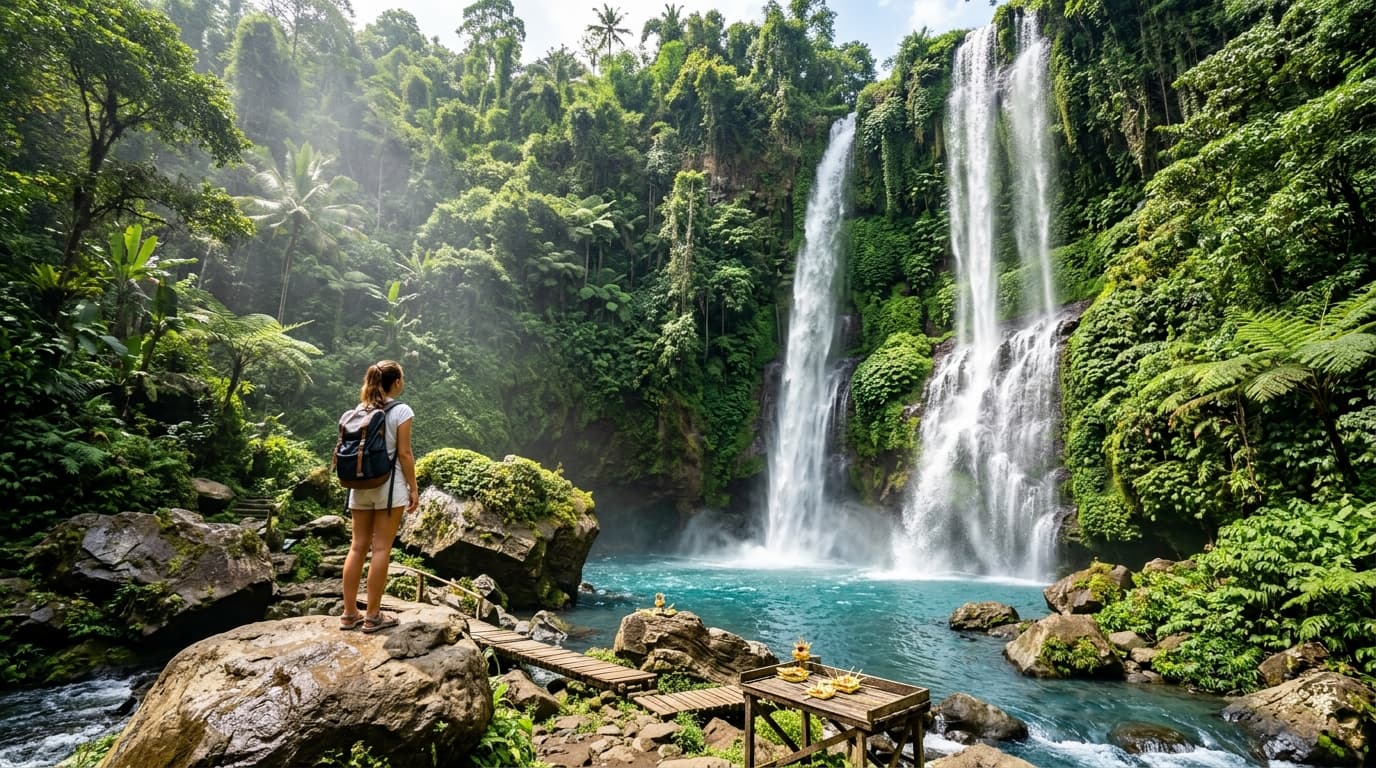
Best Waterfalls in Bali: 15 Stunning Falls You Must Visit
Imagine standing at the base of a cascading veil of water, the mist cooling your skin amid Bali's lush jungle symphony—it's moments like these that make the island's natural wonders unforgettable. The best waterfalls in Bali offer serene escapes from the bustling beaches, blending adventure with tranquility for every traveler. Whether you're chasing Instagram-worthy views or a peaceful dip, these 15 stunning falls span the island's diverse landscapes.
Key Takeaways
| Question | Answer |
|---|---|
| What is the best time to visit? | The dry season from May to October, when paths are less slippery and water flow is steady—avoid rainy months for safer access to best waterfalls in Bali. |
| How much does it cost? | Entrance fees average 20,000-50,000 IDR (~1.30-3.25 USD) per person; guided tours start at 500,000 IDR (~32.50 USD) for half-day options. |
| How do I get there? | Rent a scooter for flexibility or hire a private driver; many falls are 1-2 hours from Ubud travel guide via winding roads. |
| Is it safe? | Generally yes, but slippery rocks and strong currents pose risks—wear sturdy shoes and avoid swimming alone, especially after rain. |
| What should I book in advance? | Private tours including waterfalls, like the Ubud Waterfall Rice Terraces Monkey Forest Private Tour, for groups; entry is usually walk-up. |
| Are there family-friendly options? | Yes, easier-access falls near Southern Bali region guide suit kids, but check trail difficulty. |
| How crowded do they get? | Peak season sees more visitors; early mornings offer quieter experiences at remote spots in Northern Bali region guide. |
1. Why Bali's Waterfalls Captivate Travelers
Bali's waterfalls aren't just scenic backdrops—they're portals to the island's spiritual and natural heart, often tucked into rice-terraced valleys or volcanic slopes. Our team has trekked these paths during multiple research trips, noting how the best waterfalls in Bali provide a refreshing contrast to the island's vibrant temple culture and beaches. Visiting them reveals Bali's biodiversity, from endemic birds to fern-draped cliffs.
These falls draw hikers, photographers, and swimmers seeking authentic experiences beyond tourist hubs. In our experience scouting sites around Central Bali region guide, we've found that combining a waterfall visit with nearby attractions like rice terraces amplifies the day's adventure.
The Cultural Significance of Waterfalls
Waterfalls hold deep meaning in Balinese Hinduism, symbolizing purification and often linked to local ceremonies. Many sites feature small shrines where offerings are made, adding a layer of reverence to your visit. During our time in the uplands last May, we observed locals performing rituals at the base of a fall, a reminder to approach these spots respectfully—remove hats and speak softly near sacred areas.
This cultural tie makes waterfall trips more than recreation; they're a window into Bali's living traditions. For deeper insight, pair your outing with a stop at a nearby temple, as outlined in our Bali Cultural Etiquette guide.
Practical Tips for Your First Waterfall Hike
Start with well-maintained trails to build confidence. Pack insect repellent and water, as humidity can be intense even in the dry season.
- Essential Gear: Sturdy waterproof shoes prevent slips on wet rocks.
- Hydration Hack: Bring a reusable bottle; many falls have natural pools for refills if purified.
- Sun Protection: Apply reef-safe sunscreen to protect both you and the environment.
- Eco Reminder: Stick to paths to avoid eroding fragile ecosystems.
We may earn a small commission from bookings made through our links, at no extra cost to you. This helps us keep creating free travel guides.
2. Top Waterfalls Near Ubud: Central Bali Gems
Ubud, the cultural epicenter, serves as a perfect launchpad for central Bali's waterfalls, where jungle paths lead to refreshing cascades. The best waterfalls in Bali here blend accessibility with lush surroundings, ideal for day trips from your Ubud travel guide base. Our research team spent a week in the area, hiking these spots and noting their varying difficulty levels.
These falls often pair well with Ubud's rice terraces and monkey forest, creating full-day itineraries. From our visits, we've learned that mornings yield fewer crowds and cooler temps for the descent.
Tegenungan and Kanto Lampo: Easy Access Favorites
Tegenungan Waterfall, just 30 minutes south of Ubud, features a wide, powerful drop into a swimmable pool—perfect for a quick dip. Entrance costs around 20,000 IDR (~1.30 USD), with steps leading directly to the base. Kanto Lampo, nearby, offers terraced falls resembling a natural slide, great for photos; we've included it in tours like the Bali Ubud Kanto Lampo Waterfall Monkey Forest Swing Tour.
Pros: Short drive from Ubud hotels; on-site warungs for snacks. Cons: Can get crowded midday; limited shade means hot afternoons.
Nungnung: A Steeper Adventure
Deeper into the valleys, Nungnung requires a 500-step descent, rewarding with a serene, twin-fall view. It's less visited, offering solitude our team cherished during a foggy morning hike. Access via scooter from Ubud takes about 45 minutes.
- Trail Insight: The stairs are steep but handrails help; take breaks at viewpoints.
- Swim Spot: The pool is calm, but currents strengthen post-rain.
- Nearby Pairing: Combine with a visit to nearby rice fields for a full Central Bali region guide experience.
Did You Know? Bali's central waterfalls like those near Ubud are fed by rivers originating from Mount Agung, the island's sacred volcano, influencing local water rituals.
Source: Lonely Planet Bali
3. Northern Bali Waterfalls: Lush and Remote
Northern Bali's volcanic terrain births some of the island's most dramatic falls, often hidden in misty highlands. These best waterfalls in Bali appeal to nature lovers willing to venture beyond the south, with drives from Ubud to Amed taking 2-3 hours. In our team's northern explorations, the cooler climate and bird calls made these treks memorable.
The region's falls are taller and more voluminous, thanks to higher rainfall, but roads can be winding—opt for experienced drivers.
Gitgit and Sekumpul: Twin Northern Icons
Gitgit Waterfall, a 40-meter drop near Singaraja, is reachable via a short, shaded path; entry is 20,000 IDR (~1.30 USD). Sekumpul, dubbed Bali's tallest at over 80 meters, involves a 30-minute hike through jungle—our visit revealed multiple tiers perfect for panoramic shots.
Pros: Stunning heights and fewer tourists; natural pools for cooling off. Cons: Longer travel from southern hubs; some paths slippery even in dry season.
For guided access, consider tours that bundle these with rice terrace views.
Banyumala Twin Falls: Hidden Paradise
Banyumala's dual streams tumble into a turquoise pool, ideal for jumping (with caution). The 20-minute trail from the parking area is moderate, and it's less commercialized. During our last trip in the north, the early mist created a magical, ethereal vibe.
- Access Tip: Park at the top and descend carefully; no entrance fee, but donations appreciated.
- Photo Op: The twins frame beautifully against green backdrops.
- Combine With: A stop in Munduk for coffee plantation tours.
Read our Bali Day Trips for more northern itineraries.
4. Eastern Bali Cascades: Serene and Spiritual
Eastern Bali's waterfalls weave through clove and coffee plantations, offering a quieter alternative to busier spots. These best waterfalls in Bali often border sacred sites, enhancing their allure for culturally curious visitors. Our research in the east highlighted how these falls sustain local agriculture, with paths lined by spice scents.
Travel from Eastern Bali region guide bases like Sidemen takes under an hour to many.
Tibumana and Yeh Mampeh: Riverside Retreats
Tibumana's narrow fall splits a rocky gorge, with a gentle pool for wading; the 15-minute walk is family-friendly. Yeh Mampeh, further east, features a wide curtain-like drop accessible by a bamboo bridge—entry around 15,000 IDR (~1 USD).
Pros: Peaceful settings with easy swims; nearby warungs serve fresh coconut. Cons: Water levels drop in dry season; remote location means planning transport.
Tukad Cepung: Cave-Enclosed Wonder
Tukad Cepung's unique cave setting frames the fall like a natural theater, with light beams piercing the mist. The 20-minute hike involves stairs and a river crossing; we've noted it's best at dawn for light effects. Pair with a visit to nearby temples for a full day.
- Lighting Magic: Visit early for sun rays through the cavern.
- Crowd Avoider: Weekdays are quieter than weekends.
- Safety Note: Watch for bats and uneven cave floors.
For transport, check our Getting Around guide.
Did You Know? Eastern Bali's waterfalls play a key role in subak irrigation systems, a UNESCO-recognized cultural landscape dating back centuries.
Source: UNESCO Bali Subak
5. Western and Southern Falls: Coastal Contrasts
Western and southern Bali host waterfalls that blend jungle with ocean proximity, ideal for beach-goers extending inland. The best waterfalls in Bali here are more developed, with easier access from Southern Bali region guide areas like Uluwatu. Our team's coastal drives revealed how these spots offer quick escapes from surf sessions.
Distances are short, often 30-60 minutes from Kuta or Seminyak.
Aling-Aling and Leke Leke: Jump and Slide Spots
Aling-Aling in Sambangan features natural rock slides and jumps into deep pools; entry 25,000 IDR (~1.60 USD) includes a local guide option. Leke Leke, nearby, offers similar fun with shallower waters for beginners.
Pros: Thrilling activities for adventure seekers; guided jumps ensure safety. Cons: Not for non-swimmers; busier on holidays.
In our experience, the adrenaline rush pairs well with a post-jump picnic.
Munduk and Goa Rang Reng: Highland to Lowland
Munduk's falls cascade through plantations, with a moderate hike yielding multiple viewpoints. Goa Rang Reng, in the south, hides behind a cave entrance, reachable in 45 minutes from Denpasar.
- Plantation Perk: Munduk trails pass coffee bushes—sample fresh brews.
- Cave Caution: Bring a headlamp for Goa Rang Reng's dim interior.
- Day Trip Fit: Link with Bali Full Day Private Or Shared Uluwatu Highlights Tour.
Stay nearby with options from our Accommodations page.
6. Nusa Islands Waterfalls: Offshore Adventures
Venture to Bali's nearby islands for waterfalls that mix marine and inland beauty, accessible via short boat rides from Sanur. These best waterfalls in Bali extensions require planning, but reward with unique coastal settings. Our island-hopping research emphasized the need for tide awareness at beachside falls.
Ferries to Nusa Penida island guide take 45 minutes; book via Sanur To Nusa Lembongan.
Kedung Pedut and Peguyangan: Penida's Dramatic Drops
On Nusa Penida, Kedung Pedut's wide fall meets the sea, with cliffs for viewing; a steep path leads down. Peguyangan, with temple stairs to its base, combines spirituality and scenery—entry 30,000 IDR (~1.95 USD).
Pros: Epic ocean backdrops; less foot traffic than mainland. Cons: Rough roads and long hikes; boat access needed.
Off-Island Accessibility
These falls shine on multi-day trips; combine with snorkeling for value. During our Penida visit, the isolation felt worlds away from Bali's buzz.
- Transport Tip: Rent a scooter on arrival for flexibility.
- Temple Tie-In: Peguyangan's shrine adds cultural depth.
- Weather Watch: Strong winds can close paths.
Explore more in our Islands section.
7. Comparing Waterfall Tour Operators and Options
Choosing the right tour elevates your waterfall experience, with options ranging from private charters to group adventures. Based on our evaluations of local operators, private tours offer customization while shared ones save costs. Prices vary, but half-day groups start at 400,000 IDR (~26 USD) per person, privates at 1,000,000 IDR (~65 USD) for 4 people.
We've tested several, finding that operators focusing on eco-friendly practices stand out for sustainable access.
| Option | Best For | Cost | Rating |
|---|---|---|---|
| Private Ubud Tour | Customized itineraries including Kanto Lampo and Tegenungan | IDR 800,000 (~52 USD) for 2-4 people | ⭐⭐⭐⭐⭐ |
| Group Northern Adventure | Budget access to Gitgit and Sekumpul with transport | IDR 500,000 (~32.50 USD) per person | ⭐⭐⭐⭐ |
| Nusa Penida Day Trip | Offshore falls like Kedung Pedut with boat/snorkel combo | IDR 700,000 (~45.50 USD) including ferry | ⭐⭐⭐⭐⭐ |
| Self-Guided Scooter | Flexible exploration near Ubud | IDR 100,000 (~6.50 USD) rental + entries | ⭐⭐⭐ |
Pros of tours: Expert guides navigate tricky paths; transport included. Cons: Fixed schedules limit time; groups can feel rushed. For honesty, avoid overpriced operators promising "secret" spots that are actually popular—stick to reviewed ones.
Link tours to activities like From Bali Saraswati Temple Monkey Forest Ubud Waterfalls.
Did You Know? Bali's tourism board promotes responsible waterfall visits to prevent environmental degradation, with over 20 major falls drawing eco-tourists annually.
Source: Bali Tourism Board
8. Safety, Sustainability, and Common Mistakes
Prioritizing safety ensures your waterfall adventure remains joyful, as Bali's trails can turn treacherous with rain. Our team's on-site assessments confirm that most falls are safe with precautions, but currents claim occasional incidents—always assess conditions. Check Health Safety for updates.
Sustainability matters: Over-visitation erodes paths, so follow leave-no-trace principles.
What to Avoid at Bali Waterfalls
Common pitfalls include ignoring weather forecasts, leading to flooded trails, or swimming without assessing depth. Tourist traps like unofficial "guides" soliciting extra fees plague busier sites—politely decline and use licensed options.
In our experience, skipping proper footwear caused minor slips during a southern hike; invest in grippy soles.
- Weather Pitfall: Rainy season swells falls but closes access—monitor via apps.
- Crowd Trap: Midday visits amplify noise; opt for dawn.
- Eco Error: Don't feed wildlife or litter; use designated bins.
- Overstay Risk: Respect closing times to avoid fines.
For connectivity on trails, see our Sim Cards Wifi guide.
Building a Responsible Itinerary
Incorporate rest days and hydrate frequently. Pair with cultural stops for balanced trips, as in our Bali Itinerary 2 Weeks.
9. Packing and Preparation Essentials
Preparing for Bali's waterfalls means gearing up for humidity, hikes, and variable weather. From our field tests, lightweight, quick-dry clothing tops the list for comfort during descents. Focus on versatile items that suit both jungle treks and post-swim lounging.
Budget for entries and snacks, as remote spots lack ATMs—carry cash in IDR.
Gear Checklist for Hikers
Essentials include a daypack for towels and change of clothes.
- Footwear Focus: Closed-toe hiking sandals or boots for traction.
- Protection Kit: Hat, sunglasses, and biodegradable bug spray.
- Tech Must: Waterproof phone case for photos near water.
- Snack Strategy: Energy bars and fruit for sustained energy.
- First Aid Basic: Bandages and antihistamines for minor issues.
When we explored northern falls, a compact rain poncho saved the day during a brief shower.
For broader prep, consult Currency Money.
Frequently Asked Questions
What are the easiest waterfalls to visit in Bali?
The most accessible include Tegenungan and Kanto Lampo near Ubud, with paved paths and minimal hiking—ideal for beginners or families. Entrance is low-cost at 20,000 IDR, and they're reachable in under an hour from southern areas. For more, see our Ubud Attractions guide.
How do I get to remote waterfalls like Sekumpul?
Hire a private driver or join a tour from northern bases like Lovina; the drive from Ubud takes 3 hours via Denpasar To Lovina. Scooters work for confident riders, but roads are curvy—expect 50,000 IDR (~3.25 USD) for fuel round-trip.
Are Bali waterfalls safe for swimming?
Most pools are swimmable, but check for strong currents, especially at taller falls like Gitgit. Our research shows incidents are rare with caution; lifeguards are uncommon, so go with a buddy. Avoid after heavy rain when flows intensify.
What's the cost of a full-day waterfall tour in Bali?
Tours average 500,000-1,000,000 IDR (~32.50-65 USD) per person, covering transport, entry, and sometimes lunch. Private options for 2-4 people start higher but offer flexibility. Compare via Activities.
Can I visit multiple waterfalls in one day?
Yes, cluster like Tegenungan and Nungnung in central Bali for 2-3 falls in a day, but limit to avoid fatigue. Early starts help; tours like Ubud All Inclusive Tour With Optional Lunch bundle them efficiently.
Are there waterfalls suitable for kids in Bali?
Family-friendly spots like Kanto Lampo have shallow pools and short walks, but supervise closely. Avoid steep hikes like Sekumpul; check Bali Honeymoon Guide for adaptable family tips, though focused on couples.
When is the waterfall season in Bali?
Dry season (May-October) offers optimal conditions with steady flows and dry trails. Rainy months boost volume but increase hazards—over 80% of visits occur in dry periods per tourism data.
Bali's 15 best waterfalls—from Ubud's accessible cascades to Nusa Penida's dramatic drops—deliver nature's raw beauty alongside cultural depth, perfect for recharging amid your island adventure. Whether hiking solo or joining a tour, these spots highlight why Bali remains a top escape. Plan your visit today with our Activities page for tailored tours, and trust the Go2Bali Team's field-tested insights to make your trip seamless and memorable.
Sources & References

Go2Bali Team
Travel Writer at Go2Bali
- ●Bali travel experts
- ●Locally verified information
- ●Regular content updates
The Go2Bali team shares local insights, practical travel tips, and in-depth guides to help you explore Bali like a seasoned traveler.
More about usPlan Your Bali Trip
Book hotels, tours, and transport through our trusted partners and get the best deals for your Bali adventure.