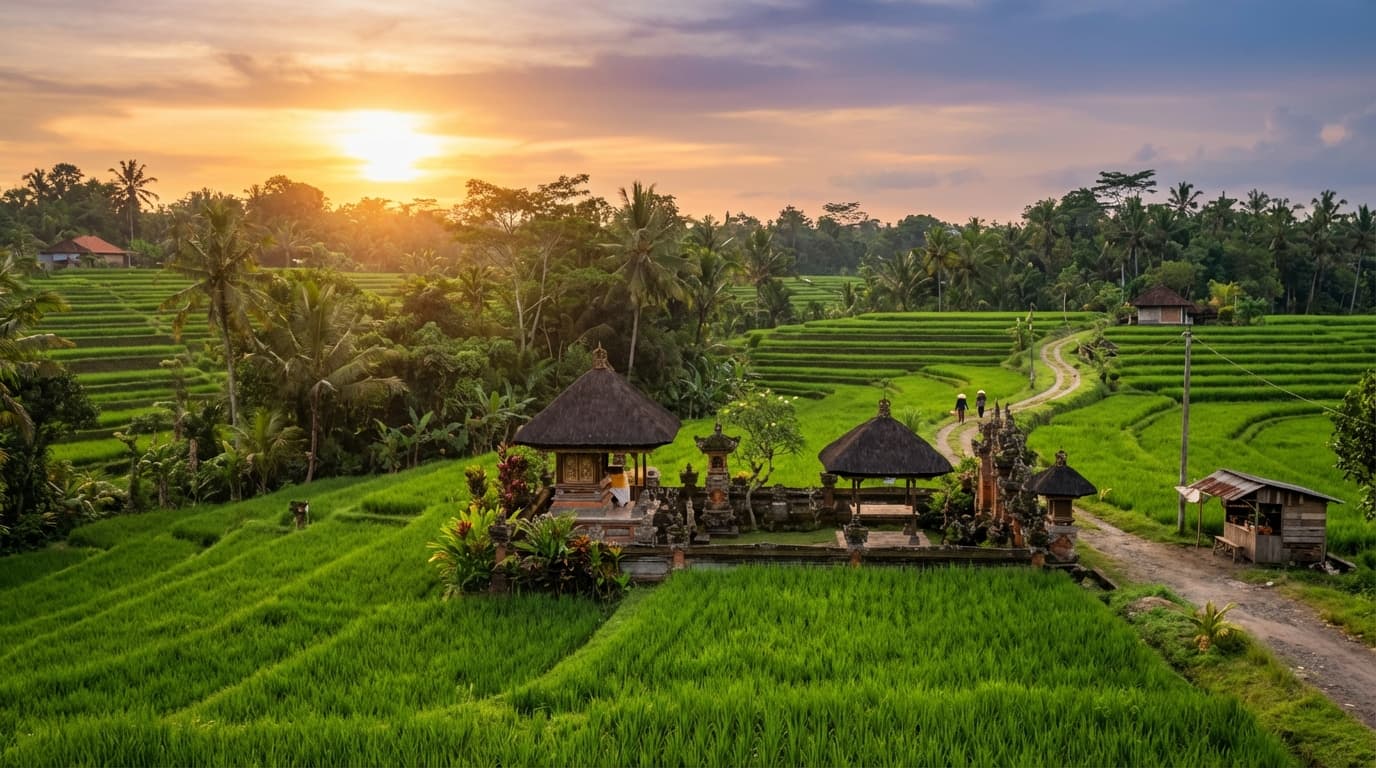
5 Most Beautiful Rice Terraces in Bali (Beyond Tegallalang)
Introduction
Bali's rice terraces are among the island's most iconic landscapes, and for many visitors, walking through these ancient, sculpted hillsides is the single most memorable experience of their trip. The terraces represent centuries of agricultural engineering, spiritual practice, and communal cooperation through the UNESCO-recognized Subak water management system. They are both stunningly beautiful and culturally profound.
Most visitors head straight to Tegallalang, the famous terraced valley 20 minutes north of Ubud that appears in every Bali guidebook and Instagram feed. Tegallalang is beautiful, but it is also overrun with tourists, swing operators, and aggressive souvenir hawkers. The good news: Bali has several other rice terrace locations that are equally or more beautiful, far less crowded, and offer a more authentic experience of Balinese rural life.
This guide covers five of Bali's most beautiful rice terraces, including practical information on access, costs, best times, and photography tips.
Understanding Bali's Rice Terraces
Before visiting, understanding the context makes the experience richer.
The Subak System
Bali's rice terraces are not just farms; they are the physical expression of the Subak system, a 1,000-year-old cooperative water management tradition recognized by UNESCO as a World Heritage cultural landscape since 2012. The Subak system distributes water from mountain springs and rivers through an intricate network of channels, weirs, and tunnels, managed democratically by farmer cooperatives.
Each Subak community (there are over 1,200 across Bali) is governed by traditional law and closely tied to the temple system. Water temples, from the supreme Pura Ulun Danu Batur on Mount Batur down to small field shrines, regulate the planting and irrigation cycle through ceremonies that synchronize with the agricultural calendar.
The Rice Growing Cycle
Understanding the growing cycle helps you time your visit for the visual effect you prefer:
- Plowing and flooding (month 1): Terraces are filled with water, creating mirror-like reflections. Stunning for photography.
- Planting (month 1-2): Young green shoots emerge from the flooded fields. A beautiful contrast of green and water.
- Growing (months 2-4): Dense, vibrant green rice plants reach knee to waist height. The most classic "green terrace" look.
- Ripening (months 4-5): Rice turns golden yellow as it matures. A warm, harvest-ready landscape.
- Harvest (month 5): Farmers cut and collect the rice. Fields are briefly bare and brown before the cycle restarts.
Bali farmers grow rice 2-3 times per year, and different areas plant at different times. This means you can find terraces at various stages simultaneously across the island.
1. Jatiluwih Rice Terraces
Why Visit
Jatiluwih is the crown jewel of Bali's rice terraces and the centerpiece of the UNESCO World Heritage Cultural Landscape. Spread across 600 hectares in the Tabanan Regency at an elevation of 700 meters, these terraces offer views that are genuinely breathtaking in their scale and beauty. Unlike the narrow, steep valley of Tegallalang, Jatiluwih spreads across wide, rolling hillsides with Mount Batukaru (Bali's second-highest peak) as a dramatic backdrop.
The name "Jatiluwih" translates roughly to "truly marvelous," and it earns it. The terraces here grow a traditional Balinese red rice variety that is larger and slower-growing than the hybrid rice found elsewhere, which contributes to the area's distinctive agricultural character.
Practical Information
- Location: Tabanan Regency, about 50 km northwest of Ubud (1.5 hours by car)
- Entry fee: IDR 40,000 ($2.56 USD) for international visitors, IDR 20,000 for Indonesians
- Opening hours: 8:00 AM - 6:00 PM daily
- Time needed: 2-4 hours depending on which walking trail you choose
- Facilities: Parking, restrooms, several restaurants with terrace views, walking trail maps at the entrance
Walking Trails
Jatiluwih offers several marked walking trails of varying lengths:
- Short loop (2 km, 30-45 minutes): Follows the main path through the most photogenic terraces. Suitable for all fitness levels.
- Medium loop (3.5 km, 1-1.5 hours): Extends deeper into the terraces with views of Mount Batukaru. Moderate fitness.
- Long loop (5+ km, 2-3 hours): The full circuit through the entire terrace system, including remote areas with few other visitors. Good fitness required.
Photography Tips
- Morning light (7:30-9:30 AM) creates the warmest tones and longest shadows across the terraces
- If terraces are flooded, visit before 10 AM when the water is still calm and reflective
- The viewing platform near the main parking area offers the classic panoramic shot
- Walk 15-20 minutes along the medium trail for more intimate, crowd-free compositions
2. Sidemen Valley
Why Visit
Sidemen, in eastern Bali's Karangasem Regency, is what Ubud was 30 years ago: a breathtakingly beautiful valley of rice terraces, traditional villages, and sacred Mount Agung views with almost no tourist infrastructure. The rice paddies here climb the slopes of the valley in gentle tiers, framed by coconut palms and mango trees, with the towering cone of Agung (Bali's highest and most sacred volcano) filling the background.
Sidemen is a place for travelers who want to experience authentic rural Bali. There are no swing operators, no Instagram photo stations, and no crowds. Just farmers working their fields, children walking to school, and the sound of water flowing through ancient irrigation channels.
Practical Information
- Location: Karangasem Regency, about 55 km east of Ubud (1.5-2 hours by car)
- Entry fee: Free (no formal entry system)
- Time needed: Half day minimum; overnight recommended to fully appreciate the area
- Facilities: Basic warungs in the village, a handful of guesthouses and small hotels
What to Do
- Guided rice terrace walk: Arrange through your accommodation for IDR 100,000-200,000 ($6-13 USD). Local guides explain the Subak system and farming life.
- Weaving villages: Sidemen is famous for traditional songket weaving. Watch artisans create elaborate textiles on handlooms.
- Sunrise viewing: Wake early for spectacular views of Mount Agung emerging from morning mist above the rice terraces.
- Cycling: The quiet roads and gentle terrain make Sidemen excellent for bicycle exploration.
Where to Stay
Sidemen has a growing selection of accommodation, from simple guesthouses at IDR 200,000 ($13 USD) per night to boutique eco-lodges like Samanvaya Luxury Resort and Wapa di Ume Sidemen. Staying overnight allows you to experience the valley at dawn and dusk, when it is most magical.
3. Belimbing (Pupuan)
Why Visit
Belimbing, near the village of Pupuan in Tabanan Regency, is one of Bali's least-visited rice terrace areas and offers an experience of raw, undiscovered beauty. The terraces here cascade down steep hillsides into a deep valley, surrounded by clove, coffee, and cacao plantations. The absence of tourism infrastructure means you often have the terraces entirely to yourself.
The drive from south Bali to Belimbing is itself an attraction, winding through mountain villages, dense forest, and some of the most scenic roads on the island.
Practical Information
- Location: Tabanan Regency, about 70 km northwest of Ubud (2-2.5 hours by car)
- Entry fee: Free
- Time needed: 2-3 hours for a walk; the drive makes a full-day trip advisable
- Facilities: Minimal. One or two warungs. Bring water and snacks.
What to Do
- Walk through the terraces on farmers' paths (ask permission at the village if unsure)
- Visit the local coffee and clove plantations in the surrounding hills
- Combine with a visit to Jatiluwih (30 minutes away) for a full rice terrace day
- Stop at the Bali Pulina coffee tasting area nearby for kopi luwak tasting
4. Tegallalang Rice Terraces
Why Visit
Despite the crowds, Tegallalang remains Bali's most accessible and dramatic rice terrace site. The terraces here are steeply carved into the walls of a narrow valley, creating a dramatic visual effect that is genuinely impressive. The proximity to Ubud center (20 minutes) makes it convenient, and the infrastructure (restaurants, cafes, and walkways) makes it easy to navigate.
Practical Information
- Location: 10 km north of Ubud center
- Entry fee: IDR 25,000 ($1.60 USD) per person
- Opening hours: 8:00 AM - 6:00 PM daily
- Time needed: 1-2 hours
- Facilities: Multiple restaurants with terrace views, restrooms, parking, souvenir shops
Navigating the Crowds and Costs
Tegallalang has become heavily commercialized. Here is what to expect:
- Photo spot fees: Local landowners have set up "photo spots" throughout the terraces (love heart seats, nest sculptures, bamboo platforms) and charge IDR 10,000-50,000 ($0.65-3.20 USD) per photo. You can decline politely.
- Swings: The famous Bali swings originated here. Rides cost IDR 100,000-200,000 ($6-13 USD).
- Hawkers: Vendors sell drinks, snacks, and souvenirs along the paths. A firm "no, thank you" works.
- Donations: Some path sections have "donation" points where locals request tips for maintaining the paths. IDR 10,000-20,000 is appropriate.
Beat the Crowds
Arrive at 7:00-7:30 AM, before the tour buses from south Bali arrive (usually 9:30-10:00 AM). Alternatively, visit at 4:00-5:00 PM when most tours have departed. The late afternoon light through the valley is spectacular.
Walk past the main viewing areas and head deeper into the terraces (left/north from the main entrance) where fewer tourists venture. The terraces continue for kilometers beyond the popular spots.
5. Campuhan Ridge Walk (Ubud)
Why Visit
The Campuhan Ridge Walk is not rice terraces in the traditional sense, but rather a paved path along a narrow ridge between two river valleys, flanked by tall grass and distant views of palm-fringed rice paddies. It offers a different perspective on Bali's agricultural landscape and is one of the easiest, most accessible nature walks on the island.
The walk starts just west of Ubud center, making it perfect for early morning exercise before a full day of activities. The ridge path is paved and flat, accessible for all fitness levels including children and elderly visitors.
Practical Information
- Location: Starts at Gunung Lebah Temple, west end of Jalan Raya Ubud
- Entry fee: Free
- Length: 2 km each way (4 km round trip)
- Time needed: 1-1.5 hours round trip at a leisurely pace
- Best time: Sunrise (6:00-7:00 AM) for the best light and coolest temperatures. The ridge becomes hot and exposed by mid-morning.
What to Expect
The path follows the narrow ridge between the Wos River valleys. Tall grass (alang-alang) lines both sides, swaying in the breeze and catching golden light beautifully at sunrise. As you walk north, the path opens to views of rice paddies in the valleys below. At the end of the ridge, you reach the Karsa Kafe, a pleasant spot for coffee and breakfast with terrace views.
Photography tips: The sunrise light turns the grass golden and creates a magical atmosphere. Use the grass as foreground texture with the misty valley behind. On clear mornings, Mount Agung is visible in the distance.
Responsible Visiting Tips
Rice terraces are active farmland, not theme parks. Keep these guidelines in mind:
- Stay on established paths: Walking across rice paddies damages the delicate bunds (walls) that hold water. Rebuilding them is backbreaking labor for farmers.
- Do not pick the rice: It may be tempting to touch or pull a rice stalk, but this is someone's livelihood.
- Ask before photographing farmers: Most are friendly and happy to pose, but asking is respectful.
- Support local businesses: Eat at the warungs near the terraces, hire local guides, and buy handicrafts from village shops. This ensures that tourism benefits the farming communities who maintain these landscapes.
- Carry out your trash: Do not leave water bottles, tissues, or food wrappers in the fields.
- Respect the small temples and shrines: Every rice terrace has small shrines for offerings to Dewi Sri, the goddess of rice and fertility. Do not touch, sit on, or move offerings.
Final Thoughts
Bali's rice terraces are far more than a pretty backdrop for vacation photos. They represent a living cultural tradition that has shaped the island's landscape, society, and spiritual life for over a thousand years. Whether you visit the grand expanse of Jatiluwih, the untouched beauty of Sidemen, or even the Instagram-famous Tegallalang, take a moment to appreciate the extraordinary human achievement behind these landscapes: centuries of cooperative farming, engineering, and devotion that turned volcanic hillsides into one of the most beautiful agricultural systems on Earth.
Frequently Asked Questions
What is the best time of year to see Bali's rice terraces?
Rice terraces are beautiful year-round but look different depending on the growth cycle. Freshly planted terraces (flooded with water creating mirror reflections) are most photogenic and typically occur 1-2 months after the rainy season starts (December-January). Lush green terraces peak around February-April. Golden, harvest-ready terraces appear in May-June and September-October. The cycle varies by location as farmers plant at different times.
Are the Tegallalang Rice Terraces worth visiting?
Yes, but with caveats. Tegallalang is iconic and conveniently close to Ubud center (20 minutes), with dramatic, steeply terraced valleys. However, it is extremely touristy: expect crowds, photo-op stations charging IDR 10,000-50,000, aggressive hawkers, and swing operators. Visit at 7:00-8:00 AM to avoid the worst crowds, or consider Jatiluwih or Sidemen for a more authentic, peaceful experience.
How does the Subak irrigation system work?
Subak is the traditional Balinese water management system dating back to the 9th century and recognized by UNESCO. It is a cooperative system where farmers share water from rivers and natural springs through an intricate network of canals, tunnels, and dams. Water is distributed according to a democratic agreement managed by the subak council, ensuring fair irrigation for all rice paddies. The system is tied to the Hindu temple network, with water temples regulating distribution cycles.
Can I walk through the rice terraces or only look from above?
You can walk through most rice terraces on narrow paths between the paddies. At Tegallalang and Jatiluwih, established walking trails wind through the fields. At Sidemen and Belimbing, you can arrange guided walks with local farmers. Always stay on the paths to avoid damaging crops, and be prepared for muddy, uneven terrain. Wear shoes with grip, not flip-flops.
Do I need a guide to visit rice terraces in Bali?
Not required for Tegallalang or Jatiluwih, which have clear paths and signage. For Sidemen, Belimbing, and remote terraces, a local guide enhances the experience significantly, explaining the farming cycle, Subak system, and village life. Guides at villages typically charge IDR 100,000-200,000 ($6-13 USD) for a 1-2 hour walk.
What should I wear to visit rice terraces?
Wear comfortable shoes with good grip (sneakers or hiking sandals, not flip-flops), lightweight long pants or shorts you do not mind getting muddy, a hat for sun protection, and sunscreen. Bring water and insect repellent. If visiting during or after rain, expect muddy paths and consider waterproof shoes. A small towel is useful for wiping sweat and mud.
Are the rice terraces free to visit?
Tegallalang charges IDR 25,000 ($1.60) per person. Jatiluwih charges IDR 40,000 ($2.56) for international visitors. Sidemen and Belimbing are free to access, though a small donation to local farmers or their temple is appreciated. Additional charges may apply for parking (IDR 5,000) and specific photo spots or swings.
Sources & References

Go2Bali Team
Travel Writer at Go2Bali
- ●Bali travel experts
- ●Locally verified information
- ●Regular content updates
The Go2Bali team shares local insights, practical travel tips, and in-depth guides to help you explore Bali like a seasoned traveler.
More about usRelated Articles
 nature
10 Best Waterfalls in Bali: Hidden Gems & How to Get There
Discover the 10 most beautiful waterfalls in Bali, from the famous Sekumpul to hidden jungle cascades. Includes directions, entry fees, difficulty ratings, and the best time to visit each waterfall.
12 min read
 guides
20 Most Instagrammable Places in Bali (with Map)
Plan your Bali photography journey with this guide to the 20 most stunning photo spots on the island. Includes GPS coordinates, best times for light, entry fees, and tips to avoid crowds at each location.
11 min read
 city guide
Ubud Travel Guide 2026: Temples, Rice Terraces and Culture
Complete Ubud travel guide: temples, rice terraces, neighborhoods, where to eat, stay & itineraries. Local insider tips for 2026.
21 min read
Plan Your Bali Trip
Book hotels, tours, and transport through our trusted partners and get the best deals for your Bali adventure.