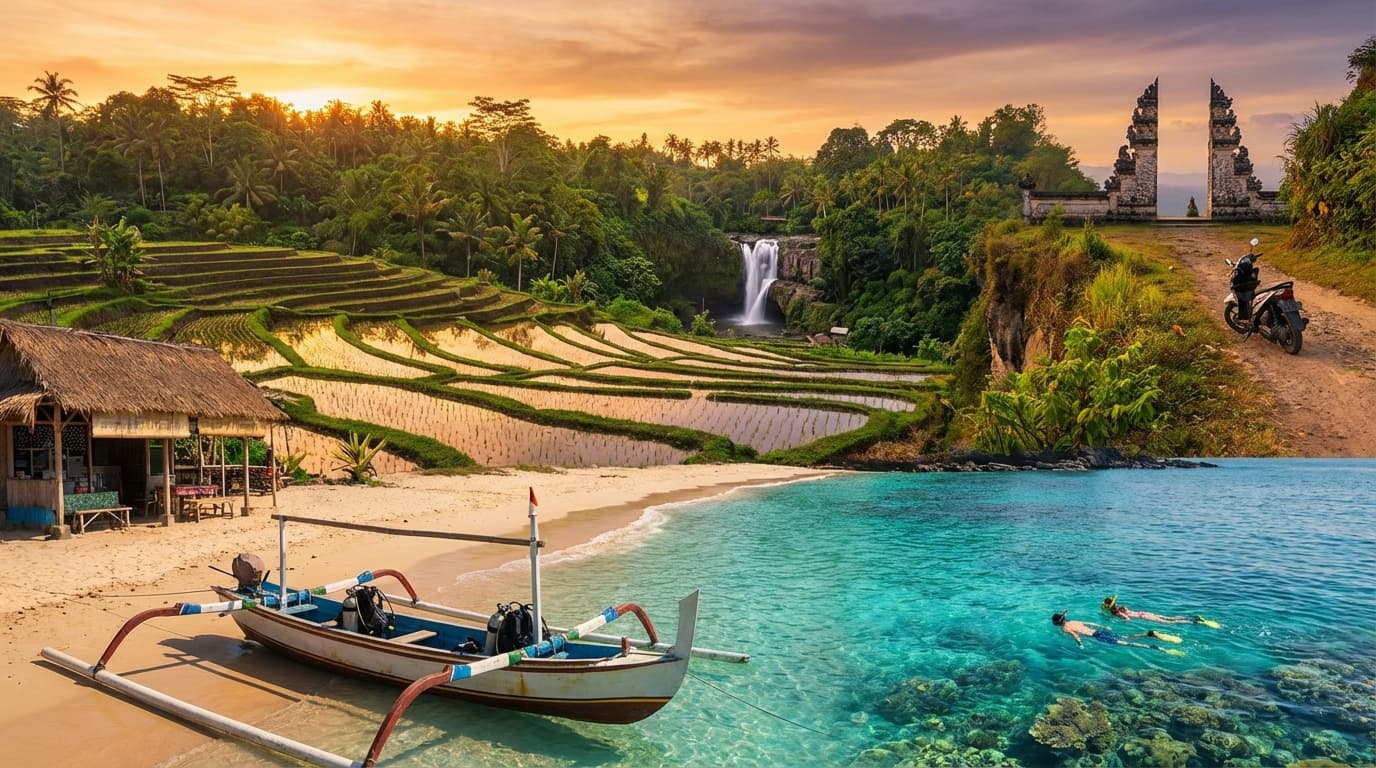
Bali Diving & Snorkeling: Best Spots, Prices & Tips
Introduction
Bali sits at the heart of the Coral Triangle, the global epicenter of marine biodiversity, and the diving and snorkeling here reflect that extraordinary position. Within a few hours of your hotel, you can explore a World War II shipwreck encrusted in vibrant coral, swim alongside 5-meter manta rays, drift through kaleidoscopic reef walls, and search for tiny, exotic creatures like pygmy seahorses and blue-ringed octopus. All at prices that make Bali one of the most affordable dive destinations in the world.
Whether you are a certified diver, looking to get your PADI card, or simply want to snorkel over colorful reefs, Bali offers experiences for every level and budget. This guide covers the best spots around the island, with practical information on operators, prices, conditions, and what you will see beneath the surface.
Best Diving Spots
1. Tulamben - USAT Liberty Wreck
Depth: 5-30 meters Level: All levels (shallow sections for beginners, deeper areas for advanced) Best season: April-November (calmest seas) What you will see: The wreck itself is covered in soft and hard corals, sponges, and gorgonians. Schools of jackfish, bumphead parrotfish, barracuda, sweetlips, and batfish swarm the structure. Garden eels populate the sandy approach. At night, flashlight fish and hunting Spanish dancers emerge.
The USAT Liberty wreck is Bali's most famous dive site and one of the world's most accessible wreck dives. The ship lies just 25 meters from shore at a depth of 5-30 meters, meaning no boat is needed and even snorkelers can observe parts of the wreck from the surface. The wreck has broken into several large sections that you can swim through, around, and over, creating an underwater landscape of remarkable beauty.
Diving costs in Tulamben:
- Single fun dive: IDR 450,000-650,000 ($29-42 USD) including equipment
- 2-dive package: IDR 800,000-1,200,000 ($51-77 USD)
- Night dive on the wreck: IDR 500,000-750,000 ($32-48 USD)
- Day trip from south Bali (2 dives, transport, lunch): IDR 1,500,000-2,200,000 ($96-141 USD)
Tips: Stay overnight in Tulamben to dive the wreck at sunrise (6:30 AM) before crowds arrive, and again at night for a completely different experience. Budget guesthouses in Tulamben start at IDR 200,000 ($13 USD) per night.
2. Nusa Penida - Manta Point and Crystal Bay
Depth: 5-25 meters Level: Intermediate to advanced (strong currents) Best season: July-November (best manta and mola mola sightings) What you will see: Oceanic manta rays (3-5 meter wingspan), reef sharks, sea turtles, and during July-October, the bizarre mola mola (ocean sunfish).
Nusa Penida delivers Bali's most thrilling marine encounters. Manta Point is a cleaning station where manta rays arrive to have parasites removed by small cleaner wrasse, allowing divers and snorkelers to observe these magnificent creatures at close range. Crystal Bay is famous for mola mola sightings during the cooler months, when these otherworldly fish rise from deep water to be cleaned by reef fish.
Important: Nusa Penida's currents are strong and unpredictable. This is not a beginner destination for diving. Snorkeling at Manta Point is possible and less demanding but still requires comfort in open water. Water temperatures can drop to 20-22C at depth due to cold upwellings, so a 3mm wetsuit is recommended.
Costs:
- Day trip from Bali (2-3 dives, boat, equipment, lunch): IDR 2,000,000-3,000,000 ($128-192 USD)
- Snorkeling trip (3 spots, boat, equipment, lunch): IDR 400,000-700,000 ($26-45 USD)
- Fast boat to Nusa Penida: IDR 200,000-350,000 ($13-22 USD) one way
3. Amed and the East Coast
Depth: 5-40 meters Level: All levels Best season: April-November What you will see: Colorful coral walls, macro life (nudibranchs, pygmy seahorses, frogfish), Japanese shipwreck, and a relaxed, uncrowded underwater environment.
Amed is a series of fishing villages along Bali's northeast coast that have become a favorite for divers who prefer a quieter, more relaxed experience than the popular south coast. The diving here focuses on two things: pristine coral walls with extraordinary macro life, and the calm, warm waters that make it perfect for beginners and underwater photography.
The Japanese Wreck near Banyuning is a small patrol boat at 5-12 meters, perfect for Open Water divers. The coral gardens at Jemeluk Bay offer easy shore diving with visibility regularly exceeding 25 meters. The Lipah Bay wall drops to 40+ meters and features sea fans, barrel sponges, and frequent turtle sightings.
Costs:
- Shore dive (equipment included): IDR 350,000-500,000 ($22-32 USD)
- 2-dive boat trip: IDR 800,000-1,100,000 ($51-71 USD)
- PADI Open Water course: IDR 5,500,000-7,000,000 ($350-450 USD)
4. Padang Bai
Depth: 5-30 meters Level: All levels Best season: April-October What you will see: Blue Lagoon's colorful reef fish, Jepun wall's black tip reef sharks, and diverse macro life.
Padang Bai is a ferry port town on Bali's east coast that doubles as an excellent, accessible dive area. Blue Lagoon is the highlight: a sheltered bay with a shallow, colorful reef that is perfect for beginners and snorkelers. The water is warm and usually calm, with visibility of 15-25 meters.
Jepun, a few minutes by boat from Padang Bai, offers a dramatic wall dive with black tip reef sharks, turtles, and schools of fusiliers. The more adventurous Gili Biaha site further east features canyon swim-throughs and occasional shark sightings.
Costs:
- 2-dive trip: IDR 800,000-1,200,000 ($51-77 USD)
- Snorkeling at Blue Lagoon: IDR 150,000-300,000 ($10-19 USD) from shore, IDR 350,000-500,000 ($22-32 USD) with boat
5. Menjangan Island (West Bali National Park)
Depth: 5-40 meters Level: All levels Best season: April-November What you will see: Pristine wall diving with enormous sea fans, sponges, visibility up to 40 meters, and a variety of reef life in an uncrowded, protected environment.
Menjangan Island, off Bali's northwest coast in the West Bali National Park, offers some of the best wall diving in the region. The island is surrounded by dramatic drop-offs where walls plunge from shallow reef to 40+ meters, decorated with enormous gorgonian fans, barrel sponges, and vibrant soft corals. The visibility here is consistently excellent, often exceeding 30 meters.
The remote location (3-4 hours from south Bali) keeps crowds away, and the national park protection ensures the reef is in excellent condition. This is Bali's best option for divers seeking pristine, undisturbed reef ecosystems.
Costs:
- Day trip from Pemuteran (2 dives, boat, park fee, lunch): IDR 1,500,000-2,000,000 ($96-128 USD)
- National park entry: IDR 200,000 ($13 USD) for international visitors
- Snorkeling trip: IDR 500,000-800,000 ($32-51 USD) including boat and equipment
Best Snorkeling Spots
For those who prefer to stay at the surface, Bali offers excellent snorkeling at several sites:
Top 5 Snorkeling Spots
- Blue Lagoon, Padang Bai: Sheltered, colorful reef, easy access, great for beginners. IDR 150,000-300,000 ($10-19 USD).
- Manta Point, Nusa Penida: Swim with manta rays from the surface. IDR 400,000-700,000 ($26-45 USD) day trip.
- Amed, Jemeluk Bay: Crystal-clear water, coral garden visible from shore. IDR 50,000-100,000 ($3-6 USD) mask/fin rental.
- USAT Liberty, Tulamben: Parts of the wreck visible from the surface in shallow sections. Free access from shore; equipment rental IDR 50,000-100,000 ($3-6 USD).
- Menjangan Island: Pristine reef, clear water, sea turtles. IDR 500,000-800,000 ($32-51 USD) day trip.
Snorkeling Tips for Bali
- Wear a rashguard: The tropical sun burns through water quickly. Long-sleeve rashguards protect your back and shoulders.
- Use reef-safe sunscreen: Chemical sunscreens damage coral. Choose mineral-based, reef-safe formulas.
- Do not touch the coral: Coral is a living organism. A single touch can kill a polyp that took years to grow.
- Wear fins: Even basic fins dramatically improve your mobility and reduce the need to stand on the reef.
- Check current conditions: Ask your operator about currents before entering the water. Even snorkelers can be caught in strong currents at sites like Nusa Penida.
Getting PADI Certified in Bali
Bali is one of the world's most popular and affordable places to earn your dive certification.
PADI Open Water Course
- Duration: 3-4 days
- Cost: IDR 5,500,000-8,000,000 ($350-512 USD)
- Includes: Classroom/online learning, confined water (pool) sessions, 4 open water dives, equipment, certification
- Minimum age: 10 years (Junior Open Water), 15 years (full Open Water)
Choosing a Dive School
Look for:
- PADI or SSI certification: Ensures international standards are met
- Small group sizes: Maximum 4 students per instructor for Open Water courses
- Well-maintained equipment: Ask to inspect regulators and BCDs. Avoid shops with visibly worn equipment.
- Insurance: The dive center should have professional liability insurance and offer DAN (Divers Alert Network) coverage
- Reviews: Check Google, TripAdvisor, and PADI's website for verified reviews
- Instructor ratios: Do not accept more than 4 students per instructor for certification courses
Recommended Areas for Certification
- Tulamben or Amed: Calm waters, excellent visibility, wreck and reef dives. The most relaxed learning environment.
- Padang Bai: Sheltered Blue Lagoon for pool-alternative sessions, variety of dive sites nearby.
- Sanur or Nusa Lembongan: Easy access from south Bali, calm conditions for beginners.
Seasonal Marine Life Calendar
| Month | Highlights |
|---|---|
| January-March | Whale sharks (rare, Amed area), hammerhead cleaning stations |
| April-June | Best visibility, manta rays beginning, calm seas everywhere |
| July-September | Mola mola season begins, peak manta rays, dolphins |
| October-November | Peak mola mola, mantas still present, whale shark sightings possible |
| December | Transition period, rougher seas in some areas |
Safety and Health
Pre-Dive Health
- Do not fly for 18-24 hours after diving: This prevents decompression sickness. Plan your dive schedule to allow at least 18 hours before your flight.
- Stay hydrated: Dehydration increases decompression risk. Drink plenty of water before and after dives.
- No alcohol before diving: Alcohol dehydrates and impairs judgment. Save the Bintang for after your dives.
- Equalize early and often: Ear equalization problems are the most common issue for new divers. If you cannot equalize, ascend slightly and try again. Never force it.
Emergency Contacts
- DAN (Divers Alert Network) Asia-Pacific: +61-8-8212-9242 (24-hour emergency hotline)
- Sanglah Hospital Hyperbaric Chamber (Denpasar): +62-361-227911 (the nearest recompression facility)
- Ensure your dive insurance covers hyperbaric treatment, which can cost $5,000-30,000 USD without insurance
Final Thoughts
Bali's underwater world is a treasure that rivals its above-water beauty. From the haunting, coral-encrusted USAT Liberty wreck to the awe-inspiring sight of a manta ray gliding overhead, the island offers diving and snorkeling experiences that create memories lasting far longer than any sunburn or temple photo. Whether you are taking your first breaths underwater through a PADI course or logging your thousandth dive on a Nusa Penida current ride, Bali's marine diversity, warm waters, and affordable dive infrastructure make it one of the best underwater destinations on the planet.
Frequently Asked Questions
When is the best time for diving in Bali?
Diving is possible year-round, but conditions vary by location and season. The best overall period is April-November for the east coast (Tulamben, Amed, Padang Bai) and May-October for the south (Nusa Penida). Manta ray sightings at Nusa Penida peak from July to November. The west coast (Menjangan Island) is best from April to November. Water temperatures range from 26-30C in warm season to 20-24C in cooler months at depth.
How much does it cost to get PADI certified in Bali?
A PADI Open Water Diver course in Bali costs IDR 5,500,000-8,000,000 ($350-512 USD) over 3-4 days, including all equipment, pool sessions, 4 open water dives, and certification. This is significantly cheaper than most Western countries where the same course costs $400-800+. Advanced Open Water costs IDR 4,500,000-6,500,000 ($288-416 USD) for 2 days. Rescue Diver and Divemaster courses are also widely available.
Can non-swimmers snorkel in Bali?
Non-swimmers can snorkel with a life jacket or flotation device, which most snorkeling tour operators provide at no extra charge. You do not need to swim; you simply float face-down and breathe through the snorkel. However, knowing how to swim adds safety and enjoyment. Calm, shallow spots like Sanur reef and Blue Lagoon at Padang Bai are best for non-swimmers.
Is it safe to dive in Bali?
Yes, when done through reputable operators with proper training. Bali's main diving risks are strong currents (especially at Nusa Penida), cold thermoclines at depth, and boat traffic at popular sites. Choose a PADI or SSI-certified dive center with well-maintained equipment, proper insurance, and experienced divemasters. Avoid operators who cut corners on safety for lower prices.
Where can I see manta rays in Bali?
Manta Point at Nusa Penida is Bali's most reliable manta ray encounter. Oceanic manta rays (Mobula birostris) with wingspans of 3-5 meters visit a cleaning station here year-round, with peak sightings from July to November. Both diving and snorkeling are possible. Success rate for sightings is approximately 80% during peak season. Manta rays are also occasionally spotted at Crystal Bay and Menjangan Island.
What marine life can I see when diving in Bali?
Bali sits in the Coral Triangle, the world's epicenter of marine biodiversity. You can see: manta rays, mola mola (ocean sunfish, July-October), reef sharks, sea turtles, dolphins, octopus, nudibranchs, pygmy seahorses, barracuda schools, and thousands of reef fish species. The USAT Liberty wreck hosts an extraordinary concentration of marine life. Night dives reveal a completely different ecosystem of crustaceans, hunting eels, and bioluminescent creatures.
What is the USAT Liberty wreck in Tulamben?
The USAT Liberty is an American cargo ship torpedoed by a Japanese submarine in 1942. After being beached on Bali's northeast coast, it was pushed into the sea by the 1963 eruption of Mount Agung. Today it lies at 5-30 meters depth, just 25 meters from shore, making it one of the world's most accessible wreck dives. The wreck is encrusted with coral and home to an incredible diversity of fish, including schools of jacks, bumphead parrotfish, and occasional reef sharks.
Do I need to bring my own dive equipment to Bali?
No. All dive centers provide full equipment (BCD, regulator, wetsuit, mask, fins, tank) included in the dive price. However, many experienced divers bring their own mask (better fit), dive computer (personal tracking), and wetsuit (hygiene). If you bring your own equipment, dive centers typically offer a discount of IDR 100,000-200,000 ($6-13) per dive.
Sources & References

Go2Bali Team
Travel Writer at Go2Bali
- ●Bali travel experts
- ●Locally verified information
- ●Regular content updates
The Go2Bali team shares local insights, practical travel tips, and in-depth guides to help you explore Bali like a seasoned traveler.
More about usRelated Articles
 activities
Best Day Trips from Bali: Nusa Islands, East Bali & Mount Batur
Discover the best day trips from Bali including Nusa Penida, Mount Batur sunrise trek, East Bali temples, and island-hopping adventures. Complete guide with logistics, costs, and itineraries.
12 min read
 activities
12 Best Surf Spots in Bali for Every Level
From beginner-friendly beach breaks to world-class reef breaks, discover the 12 best surf spots in Bali with detailed info on wave conditions, best seasons, board recommendations, and local tips.
12 min read
 travel tips
Best Things to Do in Bali | Complete Guide
Discover the best things to do in Bali, from surfing and temple exploration to rice terrace hikes and island hopping adventures. Your complete guide awaits.
10 min read
Plan Your Bali Trip
Book hotels, tours, and transport through our trusted partners and get the best deals for your Bali adventure.