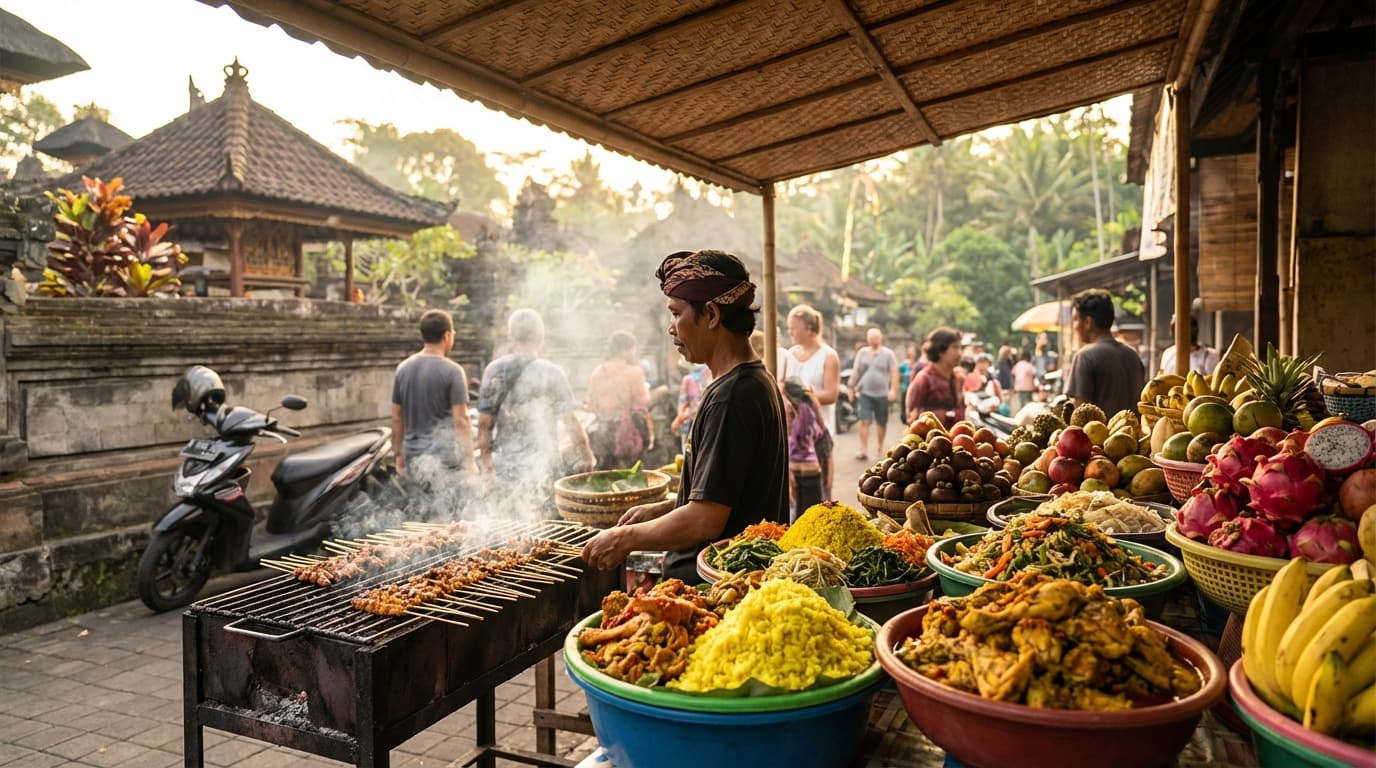
Best Cooking Classes in Bali: Learn Indonesian Cuisine
Introduction
A cooking class in Bali is one of those travel experiences that bridges the gap between tourist activity and genuine cultural immersion. When you pound a spice paste in a stone mortar, learn why turmeric root must be grated fresh, or watch a Balinese grandmother show you the exact way to wrap sate lilit around a lemongrass stalk, you are not just learning recipes. You are absorbing a culinary tradition that is inseparable from Balinese Hindu culture, where food preparation is a daily offering to the gods and a communal act that binds families and communities.
Bali has dozens of cooking schools ranging from family-run kitchens where you cook over a wood fire to sleek, modern facilities with professional equipment. This guide covers the best options across the island, what to expect, and how to choose the right class for your interests and budget.
The Balinese Kitchen: What You Will Learn
The Spice Paste Foundation
At the heart of Balinese cooking is the base (bumbu), a spice paste that forms the flavor foundation of virtually every dish. A typical base gede (basic paste) includes:
- Turmeric (kunyit): Earthy, warm, golden color
- Galangal (laos): Citrusy, piney heat (different from ginger)
- Garlic (bawang putih): Sharp, pungent
- Shallots (bawang merah): Sweet, mild onion flavor
- Chilies (cabe): Heat (adjustable to your tolerance)
- Candlenuts (kemiri): Creamy thickener (macadamia is a substitute)
- Lemongrass (sereh): Bright citrus aroma
- Kaffir lime leaves (daun jeruk): Distinctive floral citrus
- Shrimp paste (terasi): Umami depth (omitted for vegetarian versions)
- Palm sugar (gula Bali): Caramel sweetness
- Coriander seeds (ketumbar): Warm, slightly sweet
Learning to make this paste is the most valuable skill you will take home. Once mastered, it is the key to dozens of Indonesian dishes.
Common Dishes Taught in Classes
Savory dishes:
- Nasi goreng: Fried rice, the national dish
- Sate lilit: Minced meat wrapped around lemongrass sticks
- Lawar: Spiced mixed vegetables with coconut
- Gado-gado: Vegetable salad with peanut sauce
- Sayur urab: Steamed vegetables with spiced coconut
- Soto ayam: Turmeric chicken soup
- Sambal matah: Raw shallot and lemongrass chili paste
- Pepes ikan: Fish wrapped in banana leaves
Accompaniments and desserts: 9. Sambal: Multiple varieties from mild to volcanic 10. Dadar gulung: Pandan crepes with coconut filling 11. Klepon: Pandan rice balls with palm sugar center 12. Pisang goreng: Fried banana fritters
Top Cooking Classes in Ubud
Paon Bali Cooking Class
Type: Traditional family compound experience Location: Lodtunduh, south of Ubud center (15-minute drive) Duration: 5-6 hours (morning or afternoon session) Price: IDR 350,000 ($22 USD) per person Group size: 6-12 people
Paon Bali is one of the most beloved cooking classes in Bali, and it is easy to see why. Run by a warm Balinese family in their home compound, the class begins with a visit to a traditional morning market where you learn to identify local ingredients. Back at the family compound, you cook 8-9 dishes in an open-air kitchen with traditional wood-fire and gas stoves, guided by instructors who share not just techniques but the cultural significance of each dish.
The setting is authentic: you cook in a family compound surrounded by offerings, temple decorations, and the sounds of village life. The food you prepare becomes a communal lunch, eaten together on a long table in the garden.
What makes it special: The cultural immersion. The family explains how food connects to Balinese ceremonies, why certain dishes are prepared for specific occasions, and how the daily offering-making process works. The market visit is led by a family member who knows every vendor.
Dishes typically taught: Base gede, sate lilit, lawar, nasi goreng, sayur urab, sambal, pepes ikan, black rice pudding, fresh spring rolls.
Bumbu Bali Cooking School
Type: Professional cooking school with cultural context Location: Nusa Dua (also offers Ubud sessions) Duration: 5 hours (morning class with market visit) Price: IDR 600,000-800,000 ($38-51 USD) per person Group size: 6-14 people
Founded by chef Heinz von Holzen, a Swiss-born chef who has spent decades documenting and preserving Balinese culinary traditions, Bumbu Bali offers a more polished, professional experience. The morning class begins with a guided tour of the Jimbaran fish market, followed by hands-on cooking in a well-equipped kitchen.
The emphasis is on technique and understanding the "why" behind each step. Von Holzen's approach respects tradition while making the cuisine accessible to Western home cooks. The school has published several acclaimed cookbooks that students receive excerpts from.
Dishes typically taught: Market-fresh seafood dishes, base gede, tuna sate lilit, lawar, bebek betutu preparation, gado-gado, sambal varieties, and a dessert.
Casa Luna Cooking School
Type: Long-established cooking school Location: Ubud center Duration: 4-5 hours Price: IDR 400,000-500,000 ($26-32 USD) per person Group size: 8-14 people
Founded by Janet DeNeefe, an Australian who married into a Balinese family and founded the Ubud Writers & Readers Festival, Casa Luna is one of Bali's longest-running cooking schools. The classes take place in the upstairs kitchen of the Honeymoon Guesthouse, with views over the surrounding gardens.
The teaching style is approachable and cultural, with stories and explanations woven between cooking steps. Janet's deep understanding of both Balinese and Western food cultures makes the instruction particularly effective for visitors trying to bridge the gap.
What makes it special: The cultural storytelling. Each dish comes with its context in Balinese life, ceremonies, and family traditions. The school also occasionally offers special-focus classes on specific topics like Balinese ceremonial foods or market cooking.
Organic Farm Cooking Class
Type: Farm-to-table experience Location: Various locations around Ubud (picked up from your hotel) Duration: 5-6 hours Price: IDR 400,000-600,000 ($26-38 USD) per person Group size: 4-10 people
Several operators around Ubud offer cooking classes based at organic farms where you begin by walking through the growing fields, picking your own vegetables, and learning about Balinese agriculture and the Subak irrigation system. The connection between land and plate is immediate and tangible.
These classes typically involve a longer garden or farm walk (30-45 minutes), followed by cooking in a traditional kitchen set among rice paddies. The food is exceptionally fresh, and the setting, often a bamboo pavilion overlooking green terraces, is beautiful.
What makes it special: The farm-to-table journey. Understanding where ingredients come from and how they are grown adds a dimension that kitchen-only classes miss.
Cooking Classes in Canggu and Seminyak
The Amala Cooking Class
Type: Modern, professional kitchen setting Location: Seminyak Duration: 3-4 hours Price: IDR 500,000-700,000 ($32-45 USD) per person Group size: 6-10 people
The Amala offers a more upscale, polished cooking experience in a professional kitchen setting. The focus is on creating refined versions of Balinese classics, with attention to plating and presentation alongside traditional flavor profiles. The class ends with your meal served in the restaurant setting with wine pairing options.
Canggu Community Cooking Classes
Several informal cooking classes operate in Canggu, often run by local families in their homes or by Balinese chefs at restaurants. These tend to be smaller (4-8 people), more casual, and slightly cheaper (IDR 250,000-400,000 / $16-26) than Ubud's more established schools. Look for current options on Google Maps, TripAdvisor, or ask at your accommodation.
Specialized Cooking Experiences
Plant-Based and Raw Food Classes
Ubud's strong vegan and health food scene extends to cooking instruction:
- Alchemy (Ubud): Raw food preparation classes teaching dehydrator techniques, nut milks, raw desserts, and living food preparation. IDR 350,000 ($22 USD) for a 3-hour class.
- Sayuri Healing Food (Ubud): Plant-based Balinese cooking with emphasis on healing properties of ingredients. Classes explore the medicinal uses of turmeric, ginger, and other traditional ingredients. IDR 400,000 ($26 USD).
Private Couple Cooking Classes
For honeymooners or couples, several schools offer private sessions:
- Paon Bali Private: IDR 800,000-1,000,000 ($51-64 USD) per couple for a private session with the same market visit and cooking experience.
- Villa-based cooking: Some private chefs offer to come to your villa and teach you in your own kitchen. Expect IDR 1,000,000-2,000,000 ($64-128 USD) for a couple.
Kids and Family Cooking Classes
Family-friendly classes adapt the experience for children:
- Paon Bali: Welcomes children 6+ with simplified tasks (pounding spices, shaping satay, rolling spring rolls). Regular class price.
- Bali Asli (Karangasem): A more rustic, cultural experience in a traditional kitchen in east Bali. The wood-fire cooking fascinates children. IDR 500,000 ($32 USD) per person.
What to Expect: A Typical Class Timeline
7:00 AM: Hotel pickup (if included) or self-transport to meeting point.
7:30-8:30 AM: Market visit. Your guide walks you through a traditional Balinese morning market, explaining ingredients, how to select fresh produce, and the role of the market in daily Balinese life. You handle spices, smell fresh herbs, and watch vendors prepare items you will use later. Markets visited include Ubud Morning Market, Gianyar Market, or Jimbaran Fish Market depending on the school.
8:30-9:00 AM: Transfer to cooking location. Often a scenic drive through rice paddies or villages with commentary from your guide.
9:00-9:30 AM: Introduction. Your instructor welcomes the group, explains the day's menu, and introduces key ingredients and tools. You learn about the spice paste (bumbu) that forms the foundation of everything you will cook.
9:30-11:30 AM: Cooking. The hands-on portion where you prepare 5-8 dishes with step-by-step guidance. You typically work individually or in pairs at your own cooking station, following the instructor's demonstrations. Everyone makes each dish, ensuring you understand the full process.
11:30 AM-12:30 PM: Eating. You sit down to enjoy the meal you have cooked, family-style around a shared table. This is a social highlight, as you compare results, swap travel stories, and enjoy cold drinks with your food.
12:30-1:00 PM: Recipes, photos, and departure. You receive printed or emailed recipes and usually a small souvenir (spice sample, bamboo cooking utensil, or similar).
Tips for Getting the Most Out of Your Class
-
Book in advance during peak season: The most popular classes (Paon Bali, Bumbu Bali) fill up days or weeks ahead during July-August and December. Book 1-2 weeks ahead during busy periods.
-
Go hungry: You will eat a substantial meal at the end. Skip or lighten breakfast to fully enjoy what you cook.
-
Tell the school about dietary requirements: Vegetarian, vegan, halal, and allergy adaptations are available at most schools with advance notice. Do not assume they will adjust on the day.
-
Take notes beyond the recipe booklet: Write down the instructor's tips that are not in the official recipes. The off-the-cuff advice about spice quantities, heat levels, and ingredient substitutions is invaluable.
-
Photograph each step: Take photos of ingredients at the market, your mise en place, each cooking stage, and the final presentation. These visual notes help you recreate dishes at home far more than written recipes alone.
-
Buy spices before you leave Bali: Stock up on hard-to-find ingredients at the market or at supermarkets before flying home. Dried spices (turmeric, galangal, coriander) travel well. Fresh ingredients can often be found at Asian supermarkets in your home city.
-
Ask about ingredient substitutions: Good instructors will tell you what to use when you cannot find specific Balinese ingredients at home. Ginger for galangal (not identical but workable), macadamia nuts for candlenuts, regular lime zest for kaffir lime leaves.
-
Choose morning classes: The market visit is best in the morning when markets are freshest and most active. The cooking temperature is also more comfortable before the midday heat.
Bringing Balinese Cooking Home
Ingredients to Buy in Bali
Stock up before your flight:
- Dried turmeric, galangal, and coriander: Available at any market. Light and travel well.
- Kecap manis (sweet soy sauce): The thick, sweet soy that defines nasi goreng. Available at supermarkets. IDR 10,000-15,000 ($0.65-1) per bottle.
- Sambal oelek: Chili paste base. IDR 10,000 ($0.65) per jar.
- Palm sugar (gula merah): Blocks or liquid. IDR 15,000-25,000 ($1-1.60).
- Shrimp paste (terasi): Compact, powerful umami bomb. A small block lasts months. IDR 5,000-10,000 ($0.32-0.65).
- Pandan extract: For desserts and green-colored sweets. IDR 10,000 ($0.65).
Equipment Worth Buying
- Stone mortar and pestle (cobek): The traditional way to grind spice paste. Available at markets for IDR 50,000-150,000 ($3-10). Heavy to transport but lasts forever and grinds better than a blender for small quantities.
- Coconut grater: A traditional tool, more of a souvenir but fun if you use fresh coconut.
Final Thoughts
A Balinese cooking class is one of the most rewarding activities available on the island, delivering a combination of cultural education, hands-on skill building, social interaction, and genuinely delicious food. It gives you something that few other travel activities can: a lasting ability to recreate the flavors of your trip in your own kitchen, bringing a piece of Bali home with you every time you grind that spice paste and fill your kitchen with the aroma of lemongrass, turmeric, and galangal.
Frequently Asked Questions
How much do cooking classes in Bali cost?
Prices range from IDR 250,000-350,000 ($16-22 USD) for basic group classes to IDR 500,000-800,000 ($32-51 USD) for premium experiences with market tours and organic ingredients. Private couple classes cost IDR 800,000-1,500,000 ($51-96 USD). Most classes include all ingredients, equipment, a recipe booklet to take home, and the meal you cook. Some premium classes also include hotel pickup and drop-off.
Do I need cooking experience to take a class in Bali?
No experience is needed. Classes are designed for complete beginners, with instructors guiding you through every step. You will learn basic knife skills, spice preparation, and traditional cooking techniques. The atmosphere is relaxed and fun, not competitive. If you already have cooking experience, you will appreciate the deeper knowledge of Balinese spice pastes and techniques that classes provide.
What dishes will I learn to cook in Bali?
Most classes teach 5-8 dishes in a single session. Common dishes include: base gede (Balinese spice paste, the foundation of all dishes), nasi goreng (fried rice), sate lilit (minced meat satay), lawar (spiced vegetable and meat dish), gado-gado (vegetable salad with peanut sauce), sambal (chili paste), sayur urab (coconut vegetable salad), and a traditional dessert like dadar gulung (pandan crepes). Some classes also teach soto ayam (chicken soup), bebek betutu (slow-cooked duck), and rendang.
Are vegetarian or vegan cooking classes available in Bali?
Yes, many cooking schools offer vegetarian and vegan options. Some, particularly in Ubud, specialize entirely in plant-based Balinese cuisine. Traditional dishes like gado-gado, sayur urab, and tempeh dishes are naturally vegetarian. Inform the school when booking and they will adjust the menu. Alchemy in Ubud offers raw food preparation classes as an alternative.
What is the typical format of a Bali cooking class?
A typical half-day class (4-5 hours) follows this structure: hotel pickup (optional), visit to a traditional morning market (45-60 minutes), transfer to the cooking school (15-30 minutes), introduction to ingredients and spices (30 minutes), hands-on cooking of 5-8 dishes (2-3 hours), and eating your creations together (30-45 minutes). Many classes also include a walk through the school's garden or rice paddies.
Can children attend cooking classes in Bali?
Yes, most cooking schools welcome children aged 6+ for regular classes, and some offer dedicated kids' or family sessions. Children enjoy the hands-on nature: shaping satay sticks, pounding spices with a mortar and pestle, and rolling spring rolls. Paon Bali and Bumbu Bali specifically mention family-friendly options. Inform the school about children when booking so they can prepare age-appropriate tasks.
Should I take a cooking class in Ubud or Seminyak?
Ubud classes tend to be more traditional and immersive, often set in family compounds surrounded by rice paddies with a stronger cultural component (market visits, garden walks, Balinese kitchen traditions). Seminyak and south Bali classes tend to be more modern and polished with better facilities but less cultural depth. For the most authentic experience, choose Ubud. For convenience from a south Bali base, Seminyak works well.
Will I get recipes to take home?
Yes, virtually all cooking schools provide a printed or digital recipe booklet with all the dishes taught in the class. Some also email you recipes after the class with additional notes and photos. The recipes are adapted for home kitchens, with substitutions for hard-to-find ingredients. Many students successfully recreate Balinese dishes at home using these recipes.
Sources & References

Go2Bali Team
Travel Writer at Go2Bali
- ●Bali travel experts
- ●Locally verified information
- ●Regular content updates
The Go2Bali team shares local insights, practical travel tips, and in-depth guides to help you explore Bali like a seasoned traveler.
More about usRelated Articles
 travel tips
Best Things to Do in Bali | Complete Guide
Discover the best things to do in Bali, from surfing and temple exploration to rice terrace hikes and island hopping adventures. Your complete guide awaits.
10 min read
 destinations
Where to Stay in Bali: Best Areas & Neighborhoods
Find the perfect Bali neighborhood for your trip. Compare Ubud, Seminyak, Canggu, Uluwatu & more with prices, pros/cons & insider tips.
16 min read
 travel tips
First Time in Bali? Everything You Need to Know
Planning your first trip to Bali? This comprehensive guide covers everything from when to visit, where to stay, what to eat, how to get around, and how much it all costs on the Island of the Gods.
14 min read
Plan Your Bali Trip
Book hotels, tours, and transport through our trusted partners and get the best deals for your Bali adventure.