
Bali Belly: Symptoms, How Long It Lasts and What to Do
Bali belly is the local nickname for traveller's diarrhoea, usually caused by bacteria or viruses in contaminated food or drink. It often clears within a few days, and replacing lost fluids is the main priority. Blood in stools, fever, inability to keep fluids down or dehydration needs prompt medical advice; sudden severe abdominal pain or confusion needs emergency care.
This is general information, not a substitute for medical advice. The guidance below draws on the CDC Yellow Book and NHS advice, checked on 24 October 2026.
What Bali belly actually is
The name describes diarrhoea during a trip to Bali. It does not identify a particular germ, and it is not a disease unique to the island. Bacteria cause most traveller's diarrhoea; viruses and microscopic parasites called protozoa can also cause it.
Food poisoning overlaps with this description. Toxins already present in food can cause vomiting and diarrhoea within hours, often with a shorter illness than an infection. Symptoms alone cannot reliably tell you which cause you have. Nor can the timing prove that your most recent meal was responsible.
Symptoms and how long it usually lasts
Typical Bali belly symptoms include sudden, urgent loose stools, cramps and feeling sick. Vomiting can occur, especially with viral infections. Fever, bloody diarrhoea and severe pain are reasons to seek care rather than assume this is an ordinary stomach upset.
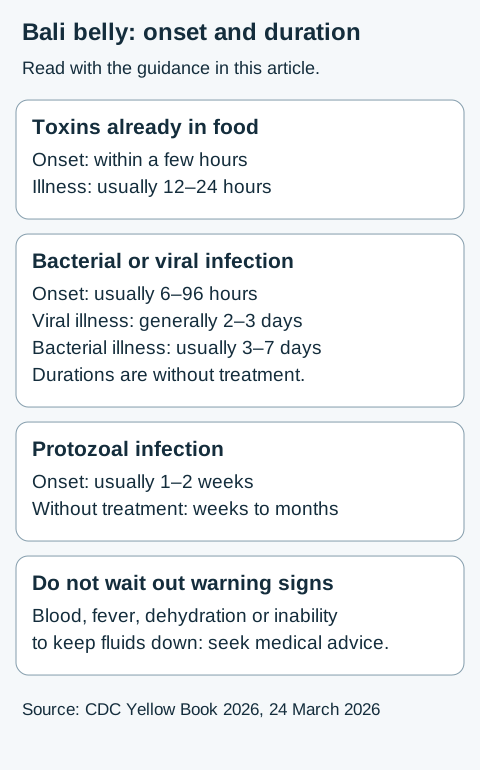
CDC typical ranges distinguish time from exposure to symptoms from the length of the illness. They cannot diagnose your cause.
- Toxins in food: symptoms can begin within a few hours and usually resolve within 12–24 hours.
- Bacterial or viral infection: symptoms usually begin 6–96 hours after exposure. Untreated viral diarrhoea generally lasts 2–3 days; bacterial diarrhoea usually lasts 3–7 days.
- Protozoal infection: symptoms usually take 1–2 weeks to develop. Without treatment, diarrhoea can persist for weeks or months.
The NHS gives a broader expectation: diarrhoea usually stops within 5–7 days and vomiting within 1–2 days. Seek advice sooner if you are getting worse, even within these typical ranges. Symptoms can also start after you leave Bali. Tell a clinician about your travel, especially if diarrhoea persists.
What to do in the first 24 hours
Start replacing fluids as soon as diarrhoea or vomiting begins. If you feel nauseated, take small sips frequently. Use sealed water, boiled water or water known to have been properly treated or purified.
- Ask a pharmacist about oral rehydration salts (ORS). These replace water and salts lost through diarrhoea. Mix the sachet with the exact amount of safe water stated on its packaging. Do not guess the dilution.
- Eat when you feel able. You do not need to force a meal. Small portions of food you tolerate may be easier; the NHS suggests avoiding fatty or spicy food if it makes you feel worse.
- Avoid fruit juice and fizzy drinks. The NHS advises against them because they can worsen diarrhoea. CDC also warns about large quantities of very sweet drinks. They should not replace ORS when rehydration is needed.
- Rest and change your plans. A tour, boat trip or long transfer should not take priority over drinking and monitoring your condition.
- Watch for dehydration. Dark, strong-smelling urine or peeing less often than usual are warning signs. Get advice if these appear; seek urgent help if they continue despite ORS.
For a baby, continue breast or usual-strength formula feeds and seek advice early. Do not dilute formula. Babies and young children can become dehydrated more quickly, and adult medicine advice does not apply to them.
Diarrhoea and vomiting can spread easily. Wash hands frequently with soap and water, avoid preparing food for others and do not share towels or utensils. Clean shared bathroom touchpoints. The NHS advises staying out of swimming pools until at least 48 hours after symptoms stop, even if you feel ready to resume your holiday.
Pharmacy, doctor or emergency?
How much the illness affects you matters alongside its duration. CDC describes mild diarrhoea as tolerable without disrupting activities, moderate illness as distressing or interfering with plans, and severe illness as incapacitating or preventing activities altogether. Bloody diarrhoea counts as severe.
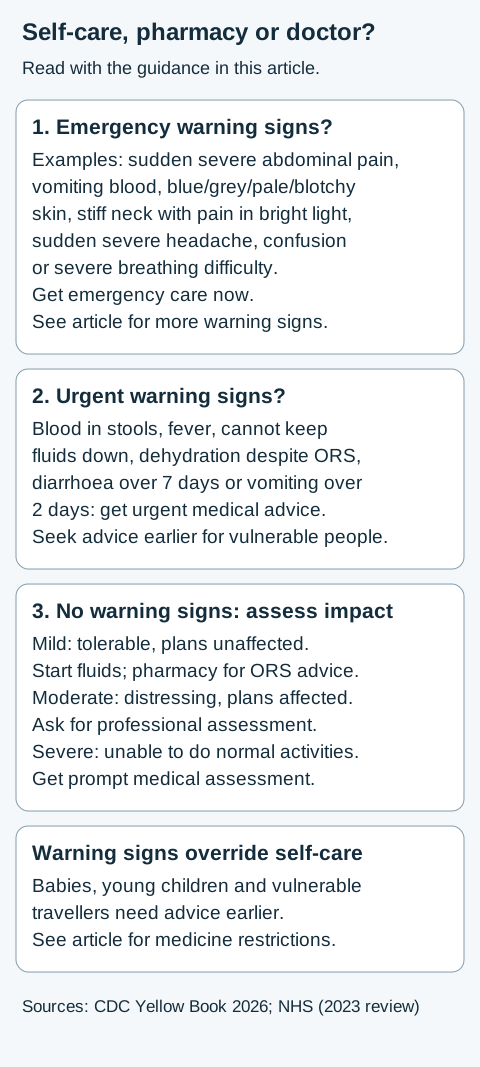
Based on CDC severity categories and NHS warning signs. Read the details below; any warning sign overrides a mild label.
When a pharmacy can help
For mild symptoms without warning signs, focus on fluids and ask a pharmacist about ORS. Explain your symptoms, age, existing conditions, pregnancy if relevant, and any medicines you take. If symptoms disrupt your plans, ask for an assessment rather than simply requesting something to stop diarrhoea.
Loperamide can temporarily reduce diarrhoea, but it does not replace fluids or treat every cause. Do not use it for diarrhoea with blood or fever. Follow the label and pharmacist's advice. NHS guidance says medicines to stop diarrhoea are not suitable for children under 12; seek professional advice for a child instead of applying adult instructions.
Antibiotics are not recommended for mild traveller's diarrhoea. For more serious illness, a clinician must assess whether they are appropriate. Do not choose or start antibiotics yourself: side effects and antibiotic resistance matter, and the cause may not be bacterial. A pharmacist can advise on getting the right medical assessment.
Get urgent medical advice
Seek assessment promptly for:
- blood in stools or diarrhoea with fever;
- repeated vomiting that prevents you keeping fluids down;
- dehydration that continues despite ORS;
- diarrhoea lasting more than 7 days or vomiting more than 2 days;
- severe illness that leaves you unable to carry out normal activities.
Seek advice earlier for babies, young children, older adults and people with chronic illness or weakened immunity. If you are pregnant, ask for advice early rather than self-treating. A baby stopping feeds, fewer wet nappies in a young child, or concern about a baby under 12 months needs urgent advice. Do not wait for the duration thresholds in these situations.
Get emergency care now
Get emergency care now for warning signs including:
- vomiting blood or material resembling coffee grounds;
- green vomit in adults, or yellow-green or green vomit in children;
- possibly having swallowed something poisonous;
- a stiff neck with pain when looking at bright lights;
- a sudden, severe headache or sudden, severe abdominal pain;
- blue, grey, pale or blotchy skin, lips or tongue (on brown or black skin, this may be easier to see on the palms or soles);
- severe difficulty breathing or lots of quick, short breaths;
- confusion or not responding as usual.
These are examples, not an exhaustive list. Do not dismiss serious symptoms as Bali belly.
Use our Bali safety guide for emergency contacts and methanol warnings. If serious symptoms follow alcohol consumption, particularly visual problems, confusion or breathing problems, seek urgent care and tell staff what was consumed. Do not try to diagnose the cause yourself.
Lowering your risk in Bali
Careful choices reduce risk, but they cannot guarantee that you will avoid Bali belly. CDC notes that restaurant hygiene and sanitation are partly outside a traveller's control. Getting ill does not prove you ignored precautions.
- Wash hands with soap and water, especially before eating and after using the toilet. When washing is not possible, carry hand sanitiser containing at least 60% alcohol.
- Choose sealed or appropriately treated water. For rehydration, CDC specifies sealed, boiled, treated or otherwise purified drinks. Clear-looking water alone is not proof of safety.
- Choose thoroughly cooked food served hot. Look for clean handling and protected ingredients. Restaurant hygiene can still be difficult to judge from what you can see.
- Treat ice and uncooked food as questions about water and handling. Neither a blanket ban on street food nor a restaurant's price tells you everything about its safety.
Our Bali food guide helps with choosing dishes; apply the same hygiene checks wherever you eat. Add ORS sachets and basic first-aid supplies to your Bali packing list, and keep instructions with them.
Before travel, discuss vaccines with a travel-health professional. CDC's Indonesia guidance includes hepatitis A and typhoid recommendations. These concern separate infections and do not provide general protection against Bali belly. Food and water precautions still matter after vaccination.
Myths and what the evidence says
Probiotics are not established prevention. CDC finds the evidence insufficient to recommend them for preventing traveller's diarrhoea. Do not rely on them to make risky food or water safe.
Preventive antibiotics are not for most travellers. CDC advises against routine use because the risks include side effects and resistant bacteria. Any exception needs an individual clinical decision.
Having it once does not make you immune. CDC notes that short-term travellers can have more than one episode during a single trip. Continue precautions after recovering, and reassess new symptoms rather than assuming they have the same cause.
Insurance and paperwork
Check your policy's medical cover and assistance procedure before departure. Save the assistance number offline, and ask what documentation is needed for a claim. Keep medical notes, prescriptions and itemised receipts if you receive care. Check the policy terms and ask the insurer what cover applies to your circumstances.
Our Bali travel insurance guide explains what to check. If you need emergency care, get help first rather than delaying treatment to sort out paperwork.
Frequently Asked Questions
What is Bali belly and how does it feel?
Bali belly is the nickname for traveller's diarrhoea in Bali, not a separate disease. It often starts with urgent loose stools and stomach cramps. Nausea, vomiting and fever can occur; blood in stools or fever needs medical assessment.
How long does Bali belly last?
CDC gives typical untreated durations of 2–3 days for viral diarrhoea and 3–7 days for bacterial diarrhoea. Toxin-related food poisoning often resolves within 12–24 hours. Protozoal infections can last much longer. Seek help sooner for warning signs, or if diarrhoea lasts over 7 days or vomiting over 2 days.
Is Bali belly contagious?
Some infections causing diarrhoea spread easily between people. Wash hands with soap and water, avoid preparing food for others and do not share towels or utensils. NHS advice is to avoid swimming pools until at least 48 hours after symptoms stop.
What should I eat or drink with Bali belly?
Take frequent small sips of safe water if you feel sick. Ask a pharmacist about oral rehydration salts and mix them exactly as directed with safe water. Eat when you feel able; fatty or spicy foods may be harder to tolerate. Avoid fruit juice and fizzy drinks, which can worsen diarrhoea.
When should I see a doctor for Bali belly?
Seek urgent medical advice for blood in stools, fever, inability to keep fluids down, dehydration despite oral rehydration, diarrhoea over 7 days or vomiting over 2 days. Get emergency care for signs such as sudden severe abdominal pain, vomiting blood, confusion, blue or blotchy skin, or a stiff neck with pain in bright light. See “Get emergency care now” in this article for the full list of examples. Seek advice earlier for babies, young children or vulnerable travellers.
Can you prevent Bali belly?
Careful food and water choices and handwashing reduce the risk but cannot eliminate it. Choose thoroughly cooked hot food and sealed or appropriately treated water. Restaurant hygiene is partly outside your control, so no venue or food rule guarantees protection.
Do probiotics help prevent Bali belly?
CDC says the evidence is insufficient to recommend probiotics for preventing traveller's diarrhoea. They are not a substitute for food hygiene, rehydration or medical assessment when warning signs appear.
Sources & References

Go2Bali Team
Travel Writer at Go2Bali
- ●Bali travel experts
- ●Locally verified information
- ●Regular content updates
The Go2Bali team shares local insights, practical travel tips, and in-depth guides to help you explore Bali like a seasoned traveler.
More about usPlan Your Bali Trip
Book hotels, tours, and transport through our trusted partners and get the best deals for your Bali adventure.
Affiliate links: we may earn a commission at no extra cost to you. Prices and availability are set by each provider.